Spotlight: Coming Alive on the Ride by Michael Yang
/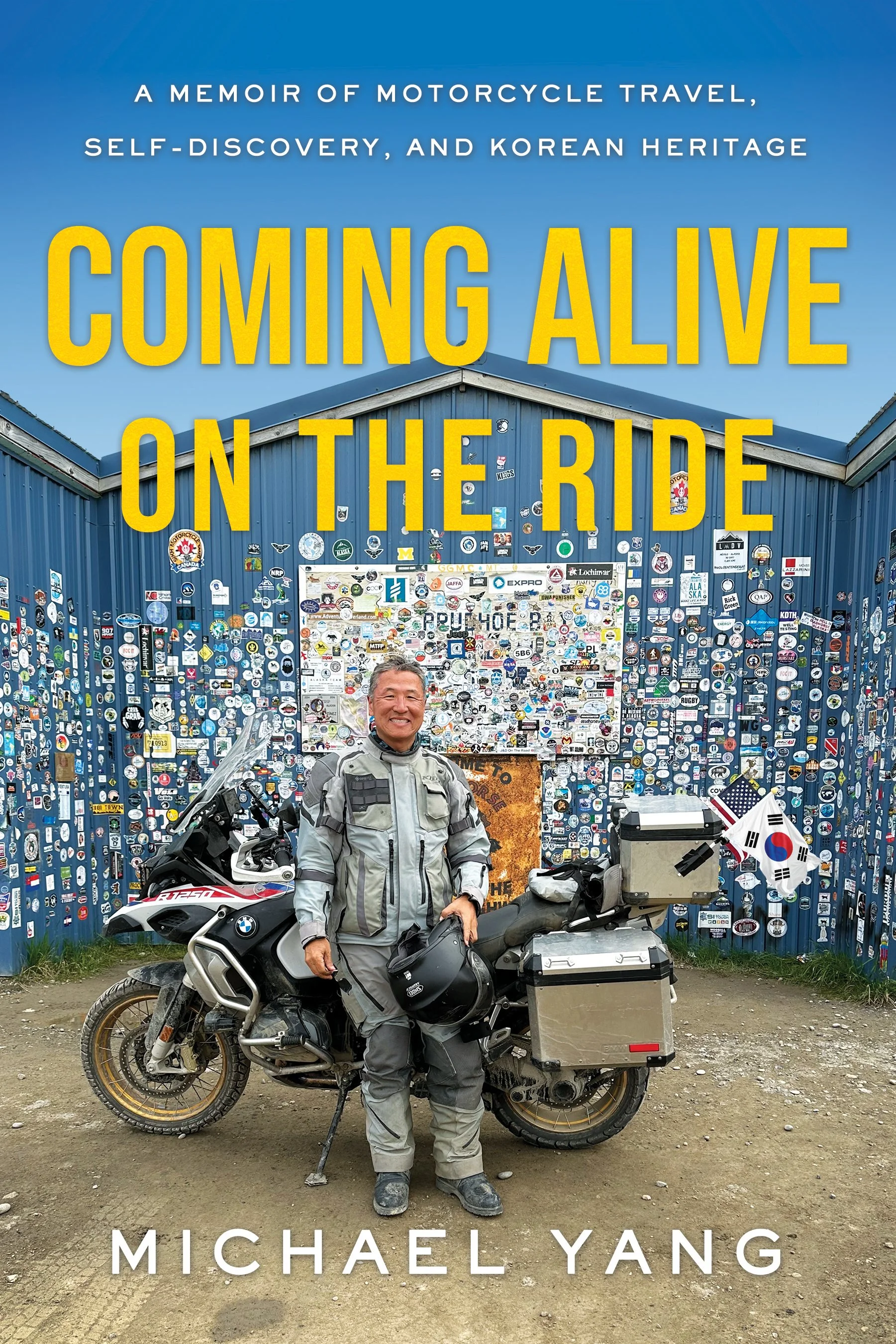
Answering the call of the open road—from Seoul to Silicon Valley to riding 40,000 life-changing miles across America
When Michael Yang bought his first motorcycle, he was a teenager who’d just moved to America. He knew little English and had few friends. Still, whenever he rode that green Yamaha, he felt more in touch with life’s possibilities. The bike was stolen a few months later, but Yang never forgot the feeling.
It wasn’t until later in life that Yang got back on a motorcycle. By then, he’d settled into Silicon Valley amidst the technology revolution; and founded, scaled, and sold a half-billion-dollar tech startup. Then, during the upheaval of the dot-com bubble burst and a few failed attempts to get new companies off the ground, Yang felt a strong pull to reengage with himself. Sensing that this mid-life crisis was an opportunity to do something fun and exciting, he revved up his bike and began riding into unfamiliar landscapes. Coming Alive on the Ride narrates more than 40,000 miles of his travels, from California’s coast to the upper reaches of Alaska, Canada’s far eastern edge, and more.
One thing about long motorcycle trips is that there’s a lot of time to think. Yang describes the unique bliss of watching the miles pass beneath two wheels as he relives moments from his past—growing up in Korea during the turbulent years after the Korean War, and moving to America as a fourteen-year-old—all the while taking in North America’s astounding scenery, from the stillness of the desert to heart-racing glimpses of a bison herds and grand mountain ranges. Somewhere along the way, it happens: Past experiences and future aspirations converge into a present discovery. This inspiring memoir is a reminder that, if we slow down and tune in our senses, adventure inspires and instructs the way nothing else can.
Excerpt
Even as a young boy, I felt a pang of embarrassment watching my parents struggle to sell their homemade snacks on the street.
My brother and I shared a room, which had a window that overlooked the entire valley. In winter, after a night of heavy snow, I’d gaze out to see the neighborhood transformed into a quiet, white wonderland. The scene was magical, the snow blanketing everything in a serene stillness. Winter became my favorite season.
By this time, I’d grown used to the cycle of upheaval, unaware that other families didn’t move as often or face such uncertainty. It seemed natural to me, a part of life that would later shape my adaptability and resilience.
While we waited, I spent a winter with my uncle Cheolyi, a middle school teacher, at his home in Sokcho, a beautiful port city on Korea’s east coast. There, I experienced the serene beauty of Mount Seorak after a heavy snowstorm, its tall trees covered in a blanket of white. Standing on that mountain, looking out over the snow-laden landscape, I felt a sense of peace I hadn’t known in months. Sokcho’s beaches on the East Sea, with the waves cresting in white foam, offered another kind of solace. Those few weeks in Sokcho gave me a rare respite, a chance to breathe in the calm before the journey ahead.
Near our rented room in Hawolgok-dong, I discovered a small bike shop that offered rentals. One sunny day, I rented a bicycle and rode ten miles to Cheongnyangni. It was my first time exploring Seoul so freely, and the thrill of independence filled me with a sense of adventure. Little did I know, this feeling of liberation would echo in my life years later, riding a motorcycle on American highways.
The sense of farewell was bittersweet; I was leaving behind all that was familiar, yet I felt a thrill of excitement for the unknown that lay ahead.
After sixteen months, our visas finally arrived. We packed our entire belongings into several imingabang—sturdy vinyl suitcases literally called immigration bags. We even shipped a pair of small jagenong, burgundy-colored chests inlaid with mother-of-pearl, my mother’s last keepsakes from Korea.
Three fifty-seven-year-old friends—all born in 1961, with graying hair and thin wrinkle lines—were now on the verge of a motorcycle expedition to the U.S.-Mexico border.
The coronavirus pandemic had broken out two months earlier, and everything was locked down. My best friend and riding buddy Karl Park and I had been planning the trip since the beginning of the year, but when the pandemic hit, we weren’t sure we’d be able to go. By May, we’d both grown a little stir-crazy.
In truth, my first multiday trip was more than a ride; it was an awakening.
I came to understand the resourcefulness of doing more with less, the creativity that blooms from scarcity, and the strength that emerges in the face of uncertainty.
My experiences weren’t confined to just nature’s offerings. They were deeply shaped by Korea’s distinct culture and customs. Once, during a visit, Uncle Cheolyi took me to a small restaurant in the neighborhood when he found no one at home. He ordered boshintang, a dog meat soup considered a delicacy and believed to be an aphrodisiac, especially popular among men in the hot summer season. I watched him with wide eyes as the steaming bowl was set before him, thick with cabbage, green onions, and crushed red pepper to compliment the meat. He scooped a spoonful and offered it to me before I could say no. I remember cooling the hot soup with my breath and tasting it. It was savory, somewhere between the taste of chicken and pork, rich with oil and pepper. I never had it again, but in that moment, it felt like a rite of passage, my first encounter with a world that valued practicality over sentiment.
Korea has always stayed with me, long after I first set foot in America.
At home, we’d heat oil on the frying pan over a yeontan (coal briquette) burner and fry the grasshoppers until they turned a crispy golden brown. These little creatures became crunchy, savory snacks, a rare, natural source of protein in a time when such things were hard to come by. I grew up viewing them as a delicacy, my own special treat—nothing unusual or off-putting, just another one of Korea’s ways of making the most of its resources.
“But,” Karl interjected, “dying while doing what you love is not a bad way to go.”
I would come to learn that in America, survival meant quickly adapting and finding small pockets of familiarity, even in the unfamiliar.
These early months were filled with both the excitement of discovery and the challenge of adapting to a foreign culture.
During breaks, kids around me chatted and laughed, but I couldn’t understand what they were saying. This isolation was painful, making me feel lost and frustrated, as though my early English studies had barely prepared me for this immersion into the language.
When there were no customers in the store, I’d pick up copies of the San Jose Mercury News or thumb through the magazines on the rack. Although I couldn’t understand every word, I pushed myself to read each article, often referring to the English Korean dictionary we had brought from Korea.
the teachings of Jesus about love and kindness resonated.
Their audacity to believe in a better life here and overcome many hardships and struggles in a new land had always been an inspiration for me.
Still, there were cultural moments that made me aware of my outsider status.
Worried that my parents might not approve, I decided on my own and bought the bike without their permission. I could still feel the thrill as I handed over my hard-earned savings, realizing that I was now the owner of a motorcycle—a personal piece of freedom on two wheels.
Riding the motorcycle wasn’t just about getting from one place to another—it was an experience.
as if the bike and I were one unit gliding through space.
Riding became my escape.
On my sixteenth birthday, I went to the DMV, passed the driver’s test, and got my license. The feeling of holding that piece of plastic was surreal—freedom in the palm of my hand.
But something about the phrase “little yellow friend” lingered. It reminded me that, as much as I was part of the team, my Korean heritage still set me apart in some people’s eyes.
When I turned my head around, Dennis was in a boxer’s stance, both fists going up and down, with a mocking grin. Something in me snapped.
All those years of Taekwondo training kicked in. Instinctively, I closed the distance between us, executing a swift, sliding hook kick to his face. My right heel connected squarely with his nose.
In many ways, my years in America were about finding a balance between adapting to a new culture and staying true to my roots.
Several people mentioned following my travels on Facebook, saying how they enjoyed living vicariously through my motorcycle adventures.
Standing by their graves, I reflected on their sacrifices and the love they poured into our family, both in Korea and after we made the journey to America.
Ultimately, my American dream had become something more than I’d ever imagined it could.
I admired him deeply, not just for his humble beginning and achievements but for the sheer audacity of his vision. His story filled me with awe, pride, and a burning desire to create my own path to success.
Despite my determination, doubts often crept in. Could I succeed in this land of boundless opportunity? Could I overcome the cultural, linguistic, and social barriers that marked me as an outsider? The fear of failure loomed large, but it only strengthened my resolve. I decided to focus on studying, working hard, and waiting for the right opportunity.
A burning sensation filled my stomach and then my chest. It was my first experience with being fired.
This habit of relentless cost comparison was born of necessity, but it became an invaluable skill. Later in life, I realized that this early practice of finding value, even in the smallest details, helped me develop a disciplined and methodical approach to problem-solving that would benefit me professionally.
When I summoned the courage to ask a girl to dance—a common practice in the United States—she looked at me in disbelief and walked away. Seongjin and his friends found my Americanized behavior amusing, reminding me of how much I had changed since leaving Korea.
To her credit, Sunny didn’t forbid me from getting back on my new bike, though her patience with my “hobbies,” as she called them, was wearing thin. I couldn’t blame her. The trips had gotten longer, the injuries were piling up, and the kids were getting older. And, as she pointed out, so was I.
The seeds of entrepreneurship had been planted in me as a child, but watching my parents’ struggles gave me the drive to turn curiosity into action.
I realized I had the skills to identify opportunities, take calculated risks, and make money on my own terms—a realization that would shape my ambitions in the years to come.
At UC Berkeley, life was a balancing act of working hard and playing hard.
I could stay with him in Paris, then backpack around Europe for five weeks, learning about history and the cultural foundations of Western civilization that shaped America.
The mastery and devotion of the Renaissance artists who created such wonders to glorify God moved me deeply.
You are living in Silicon Valley at the dawn of the information age. You can create something useful using technology - something that millions of people will use for their benefit. If you become successful, you can use that platform to help others and glorify God.
I realized that my future was intertwined with the technological revolution unfolding around me. The epiphany gave me a sense of purpose and direction that would guide my career and life from then on.
“The Conquistador is at it again . . . no mercy on these roads!”
This wasn’t just a road trip—it was an adventure that tied together history, exploration, and the sheer scale of the continent.
Sunny had been supportive of my passion for motorcycle travel, but not without reservations. “Don’t you feel bad leaving for weeks at a time?” she had asked me once.
“I do,” I admitted. “But it’s just once a year. This is something I love.”
“Sunny, when I ride and explore new places, I feel God’s joy. It’s like nothing else I’ve ever experienced.”
Even with Sunny’s approval, I vowed that these trips would be something more than sightseeing jaunts. They would be personal growth lessons that would make me a better man, father, and husband when I returned. This felt just.
These trips reminded me that adventure didn’t always have to involve motorcycles. Sharing these experiences with my family brought its own kind of joy and balance to my life.
There is something visceral and appealing to me about the mystery of the unknown, even though it’s often impossible to separate it from the nervous feelings. I’ve learned that this is a primary paradox of adventure. The greatest rides always involve anxiety and fear.
He handed me an envelope containing a termination letter and my final paycheck.
I was stunned.
That evening planted the seeds of a transformative vision. The future wasn’t PC-centric; it was Internet-centric
Taking on the role at Jazz was a risky proposition. I had a secure, well-regarded position at Samsung and was recognized as one of the company’s rising stars. Jazz, on the other hand, was in disarray. The company lacked leadership, faced financial instability, and was scrambling to salvage its product line.
Despite the risks, I saw an opportunity. Running Jazz would give me hands-on experience managing a startup, raising capital, and navigating the challenges of growing a business. I decided to give it a try
It was a leap of faith into the uncertain world of startups, driven by a vision of what could be achieved
Amid these professional challenges, my father encouraged me to return to church.
When I called Nvidia’s CEO, Jensen Huang, he acknowledged the issue and assured me they would provide a fix.
A global web of riders seemed to have my back, each post drawing comments from as far as Australia and New Zealand. Their encouragement made me wonder if I might write a book about this trip, weaving in my Korean American roots and entrepreneurial escapades alongside the miles.
My cheeks flushed, but the sheer sense of adventure overshadowed the misstep; sometimes, you just have to follow your instincts.
yet we bonded over a shared spirit of curiosity.
Hearing my children’s excited chatter revived me; it was a reminder of why I ride, and why I always look forward to coming home.
“What’s life without a challenge?”
At thirty-six years old, I was unemployed again. It was the lowest point in my career. I needed to reassess my direction and rediscover my purpose.
The setback forced me into deep introspection. I asked myself fundamental questions:
Who am I?
What do I want to do?
What am I good at?
What do I enjoy?
The path ahead was uncertain, but the lessons from my past failures provided clarity. I knew the road would be challenging, but Silicon Valley had taught me one vital truth: Setbacks were stepping stones for those who dared to keep going.
With a vision for the future and a determination to succeed, I was ready to start over—this time, on my terms.
This small annoyance planted a seed in my mind—what if there were a way to instantly compare prices across different retailers?
Reflecting on my journey to this point, I was reminded of an old Korean proverb: “It’s dark directly under the lamp.” Sometimes, the answers we seek are closer than we realize.
we set out to create a platform that would simplify online shopping for millions. mySimon.com was born.
In Portsmouth, New Hampshire, a sign reading “Live Free or Die” greeted me, capturing the rebellious spark in America’s DNA.
Yet this revolutionary spirit had different consequences for other parts of the world. At the Treaty of Portsmouth in 1905, President Theodore Roosevelt mediated an end to the Russo-Japanese War—unwittingly paving the way for Japan’s later annexation of Korea. The historical irony weighed on me, a Korean immigrant who’d reaped so many benefits in America but carried ancestral memories of colonization.
I had often reflected on the voyages that shaped North America’s destiny.
Another point of contention emerged around the CEO position. Douglas expressed concerns that, as Korean Americans, Yeogirl and I might face cultural and linguistic barriers with venture capitalists and Wall Street executives, suggesting that we appoint a White or Jewish executive as CEO. While I didn’t openly disagree, I was deeply conflicted.
The company was growing rapidly, and I recognized that leadership unity was paramount. A divided board and executive team could jeopardize everything we had built. Reluctantly, I decided to step down as CEO. I felt a mixture of shame, anger, anxiety, sadness, and relief. I believed the company’s success was more important than my own position or ego.
Walking away from the company I had nurtured from its inception was painful, but I believed it was the right decision for both mySimon and me.
As I sat at home in Cupertino after the call, my mind raced. $650 million was a life-changing sum, but was it worth giving up the dream of building an independent public company?
The dot-com market was on fire, and there was a chance we could achieve a $1 billion or even $2 billion valuation through an IPO. Yet the risks were undeniable. The market could turn, or unforeseen challenges could derail our plans. The deal with CNET was tangible, immediate, and eliminated the uncertainty of the IPO process.
By evening, I arrived in Prince George at 77°F—bemused by the thought of celebrating July 4th in a place named for King George III.
Though physically drained, I relished the deep introspection that a solo ride allows.
The return south proved to be a nightmare. Rains hammered the gravel road, turning it into a slick mud path. My visor fogged repeatedly, and I nearly lost control more than once.
The sight of gas flares and oil infrastructure against the pristine Arctic backdrop struck me as a powerful contrast—nature’s majesty intersecting with humankind’s relentless resource pursuits.
This period was one of spiritual renewal.
This trip reminded me of the importance of maintaining friendships, even amid the chaos of life.
Steep climbs and slick descents demanded a white-knuckled focus to keep upright.
Steep climbs and slick descents demanded a white-knuckled focus to keep upright.
But as I recovered, gratitude overshadowed every ache: I had faced the extreme roads of Alaska, nurtured friendships old and new, and rediscovered the depth of my own perseverance.
We both lamented negative stereotypes in the media, the “bamboo ceiling,” and how even highly successful Korean Americans remained overshadowed.
I had learned by then that detours can pleasantly surprise us if we’re willing to serve as a volunteer for the greater good of the community and country.
But as I approached my fifty-seventh birthday in 2018, the itch to ride became too strong to ignore. The sense of freedom, the thrill of the open road, and the connection with nature that riding provided—it was calling me back.
But no matter how far I rode, I always looked forward to returning home—to the family that made every journey possible and every return worthwhile.
While he joked to me more than once that his time might not be long or that he might get Alzheimer’s like his father, saying, “So be understanding if I no longer recognize you,”
He felt, more than most, that our time here on earth is fleeting,
After the funeral, I recalled the moment near the Grand Canyon in Arizona, that Karl told me dying while doing what one loves is not a bad way to go. We never thought it would happen to one of us.
Karl confessed that he’d come to believe in the story of Christ and the redeeming hand of God in his own life. I felt a deep joy well up inside me, believing that he and I would ride together again one day.
Adventure riding is about embracing the unknown, stepping out of your comfort zone, and discovering the beauty of the world in its rawest form.
Beyond Patagonia, my dream is to ride motorcycle all over the world. The world is big, and there are so many places to see. I plan to ride to North Cape in Norway, which is the northernmost motorable point in Europe as well as to Himalayas and Mongolia. I have been wanting to ride across Siberia starting from South Korea to Portugal on the eastern end of Eurasian continent. I also want to ride across the Sahara Desert in Africa, Australia, New Zealand, and many other countries all around the world before I get too old and lose strength. I want to continue to challenge myself and share my travels with others. I remember a quote from a book called Life No Limits by Myung-Joon Kim: “If you have a dream and have a plan to achieve the dream, you are never old.” I hope my adventures will inspire you to pursue your dreams and find yourself, purpose, meaning and truth.
He was a survivor, a builder, and a man who never gave up, even in the face of immense adversity.
Adventure is not just about traveling to far-off places. It’s about embracing life with an open heart, stepping into the unknown, and finding joy in the journey. It’s about the connections we make and the stories we create—stories that live on long after we’re gone.
Their lives remind me that the most profound adventures are not just about where we go but about how we live and the people we inspire along the way.
This is their legacy. And this, I realize, is now mine.
This excerpt is from Michael Yang’s new book, “Coming Alive on the Ride: A Memoir of Motorcycle Travel, Self-Discovery, and Korean Heritage.” Reprinted with permission from Michael Yang Adventures LLC.
Buy on Amazon Kindle | Audible | Hardcover | Bookshop.org
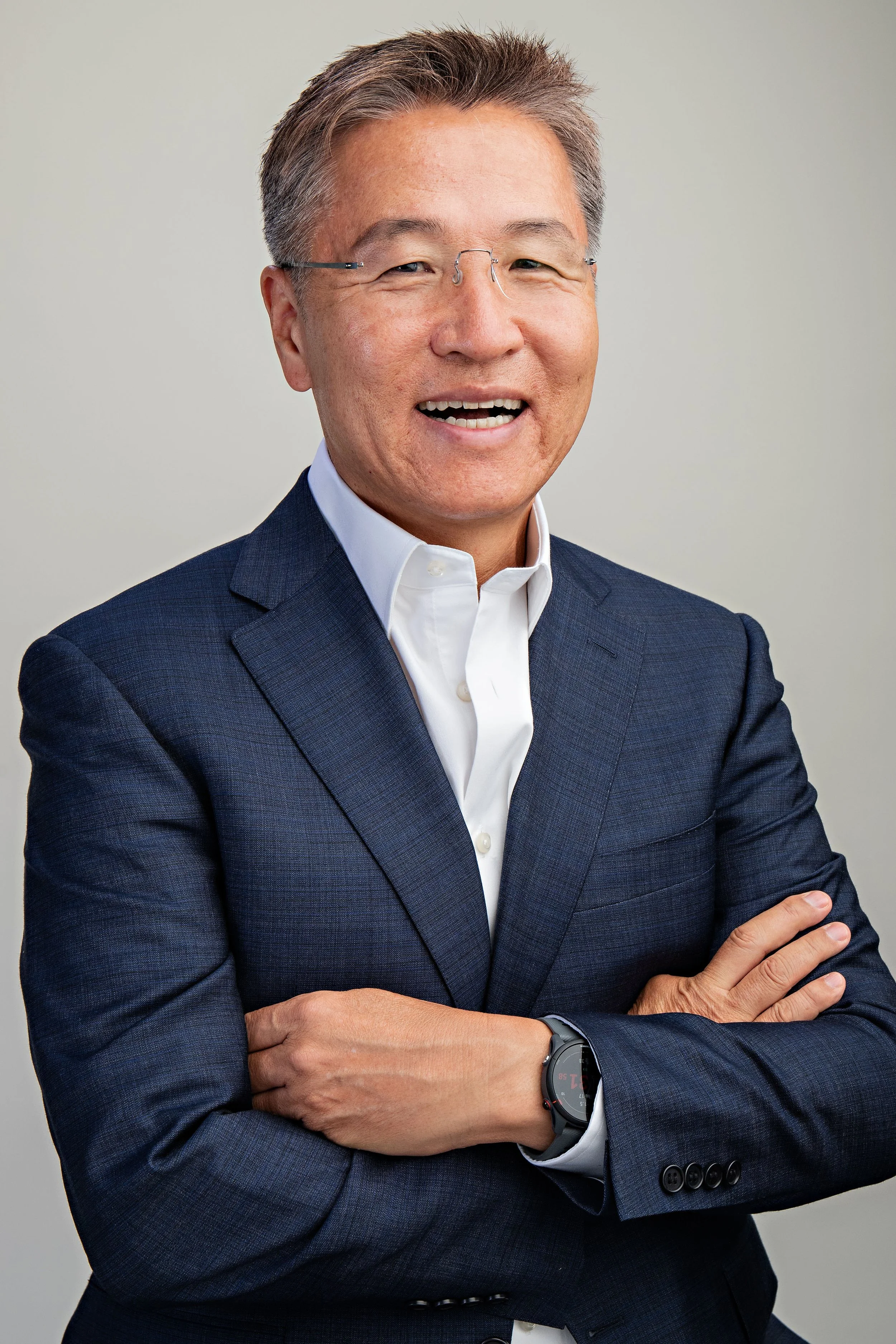
About the Author
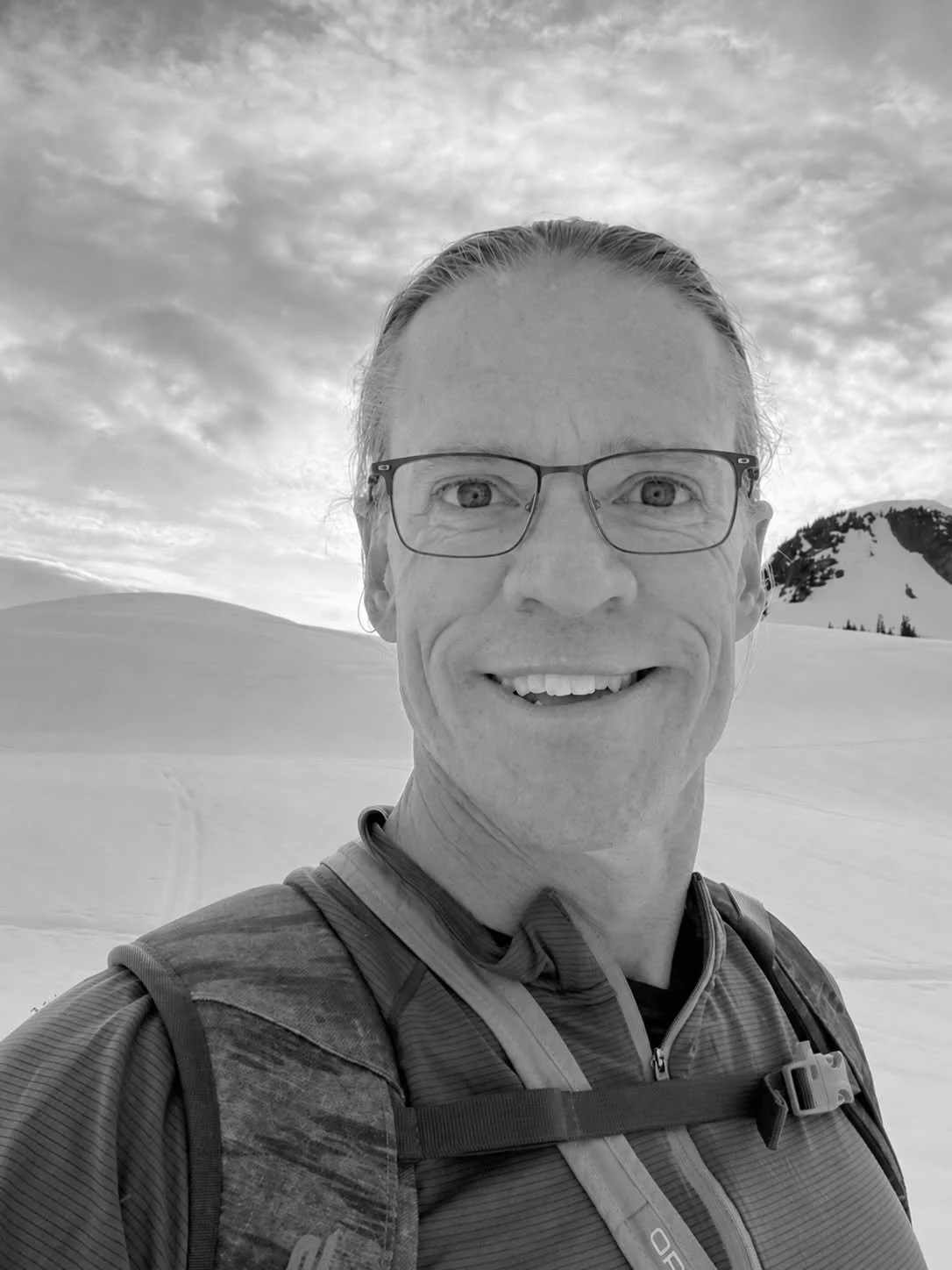
Michael Yang is a Korean American author, entrepreneur, investor, and adventure motorcycle traveler. He was born in Seoul, South Korea, in 1961, and immigrated to San Jose, California, at 14.
He founded a Silicon Valley tech startup, which was successfully acquired by a large corporation.
In his sixties, Michael began embarking on epic motorcycle journeys across North and South America. He’s ridden from Los Angeles to Prudhoe Bay, Alaska, on the Arctic Ocean; across North America to Newfoundland, Canada; and in South America’s Patagonia region from Osorno, Chile, to Ushuaia, Argentina. Riding through vast landscapes, Michael rediscovered values that shaped his life: perseverance, humility, gratitude, and an abiding sense of wonder.
Michael graduated with a bachelor’s degree in electrical engineering and computer science and a master’s degree in business administration from UC Berkeley, and a master’s degree in computer science from Columbia University. Michael holds a fourth-degree black belt in Taekwondo.
Michael lives in La Canada, California, with his wife and family. Together they share a love of travel, adventure, and purposeful-living.