Spotlight: No Man's Land by Simon Tolkien
/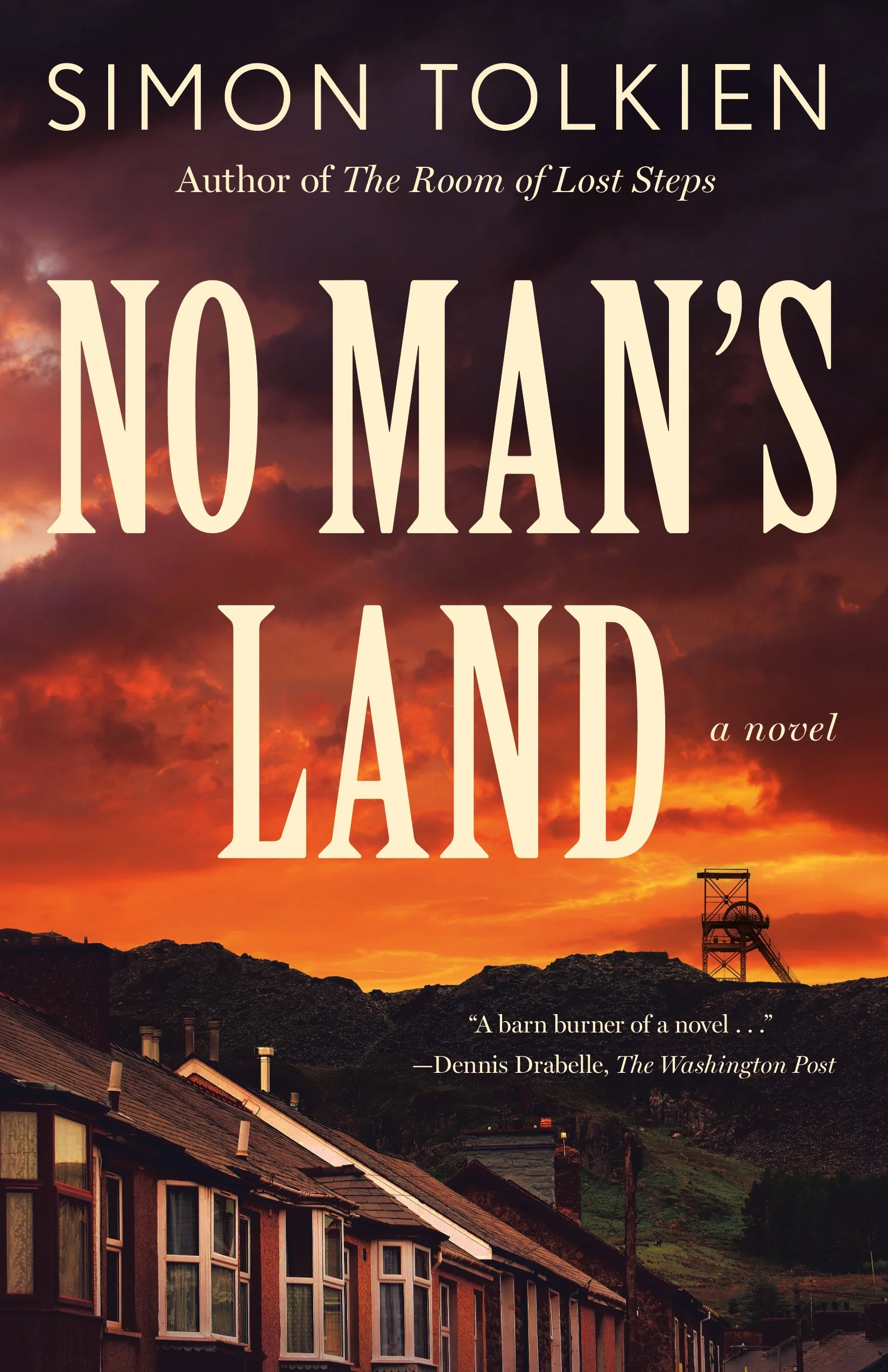
London 1910. Adam Raine is a boy cursed by misfortune. Following his mother’s tragic death, he moves north to Scarsdale, a hard-living coal-mining town, where his father finds work as a union organizer. But soon escalating tensions between the miners and their employer, Sir John Scarsdale, explode with terrible consequences. In the aftermath, Adam is taken into the Scarsdale family home, where Sir John’s son Brice is his rival for the love of the parson’s beautiful daughter. As Brice plots Adam’s downfall, the country teeters on the edge of a war that will change everyone’s lives forever.
From the grueling workhouses of London to the suffocating Yorkshire mines, from the privilege and repression of an Edwardian country estate to the explosive trenches on the Western Front, Adam’s journey from boy to man unfolds against the backdrop of a society violently entering the modern world.
Excerpt from NO MAN’S LAND by Simon Tolkien
Text copyright © 2025 by Simon Tolkien, Published by Lake Union Publishing
Most of the cinemas along the front were closed for the winter but, retracing his steps, he found one that was opening its doors for the evening. Above the entrance an illuminated marquee sign identified it as the Olympia Picture Palace offering Variety and Comedy from across the Atlantic Ocean.
Inside, the Olympia was hardly a palace despite the golden arch adorned with puffy-cheeked cherubs that framed the thick red velvet curtains across the stage, and despite the chandeliers of coloured lights suspended from the domed ceiling that tinted the fug of cigarette smoke hanging in a perpetual pall over the audience. The floor was littered with orange peel and peanut shells, and the seats had tears in their upholstery and sagged alarmingly, even though Adam had paid an extra sixpence to sit at the back where “extra comfort” was “guaranteed—and armrests.”
The cinema was practically empty when Adam first went in but soon filled up until half the population of Scarborough seemed to be crammed inside. Fuelled with bottles of cheap beer, they shrieked with laughter as the incompetent Keystone Cops waved their ineffectual batons and chased elusive bearded villains across railway tracks and farmyards—and even in one instance a terrified lady’s bedroom—to the accompaniment of a spirited ragtime played by an invisible pianist giving it his all in the orchestra pit below the stage; although even he was drowned out when words appeared on the screen and the audience as one shouted out the captioned message as if to ensure that the illiterate among them didn’t miss out on any of the entertainment.
Adam relaxed for the first time in weeks. He forgot about the war and about his troubles and anxieties and laughed until his sides hurt as everyone’s favourite comedian, Fatty Arbuckle, joined the Keystones and endured an escalating series of ritual humiliations at the hands of a group of street urchins, culminating in imprisonment in his own police station where he gazed out bulgy-eyed and miserable from behind the bars.
And then all at once the film part of the evening’s entertainment was over. The curtains fell back across the screen, and a breathtakingly beautiful woman walked out onto the stage. She had wide dark eyes matching the mass of black curls that cascaded down over the shoulders of her silver lamé tea gown, which shimmered in the lights like fish scales as she moved. She was small, dwarfed by the big stage and its ornate surround, and yet seemed entirely at ease; she had a look of wholesome innocence that was utterly out of place in the hot, bawdy, cavernous theatre that she had come to entertain.
Some rowdy members of the audience who wanted more comedy booed when they saw her, but their catcalls soon ceased when she began to sing. She had a lilting soprano voice that carried effortlessly into the furthest corners of the picture palace, and when she sang “I’ll be your sweetheart if you’ll be mine,” every male member of the audience, including Adam, felt as if she was addressing them personally.
But then came a rude awakening. After a spirited rendition of “It’s a Long Way to Tipperary” in which the entire audience joined in, she sang: “Oh, we don’t want to lose you but we think you ought to go,” and the curtains behind her swept back to reveal three tables each manned by a recruiting sergeant in full uniform. A gigantic poster of Kitchener beckoning with his forefinger to come up and enlist had been hung over the projection screen.
After the third refrain the gaslights in the theatre were turned up and the beautiful singer came down from off the stage, leaving the audience to carry on with the song accompanied by the invisible pianist. Slowly she began walking up and down the aisles, pointing with an outstretched finger at young men in civilian clothes or, when they were close enough, touching them gently on the shoulder. Behind her two young girls, dressed in matching silver gowns and with garlands of white roses entwined in their hair, followed, carrying baskets of freshly plucked white feathers to hand to any coward who refused the singer’s invitation. But there was little need for them: Either her targets had a credible excuse, which they or their companions shouted out, or they got up like sleepwalkers and went to the front where the recruiting sergeants were waiting for them.
Adam was enraged—for himself and for the men in front of him who had also been deceived. It was a cheap confidence trick: They had paid good money for an evening’s entertainment, not to be bullied into joining the army. Enlistment was far too serious a business to be undertaken on the spur of the moment because of pressure from your peers or a pretty girl telling you that “you ought to go.”
Adam could see her coming. She was close to his aisle. And something in him snapped: He had to get out into the air, away from the frenzied crowd who’d now launched themselves into a raucous reprise of “Tipperary.” He got up, stepping over the outstretched legs of the people sitting between him and the aisle. They made no effort to get out of the way. Quite the opposite: Several of them took hold of his jacket, trying to pull him back. And when he forced his way past them, they shouted out that he was “a coward and a slacker who needed to be given a good hiding.”
By the time he reached the aisle, everyone in the theatre seemed to have turned round in their seats to watch him. He had to escape: He was scared they would tear him limb from limb if they got the chance. He threw himself at the exit door, half expecting it to be locked, but instead it opened wide and he half fell out into the foyer, knocking over an old man in grey overalls who had been sweeping up ticket stubs and cigarette ends from the dirty floor. Adam picked him up, handling him as if he was a mannequin in a department store, handed him back his broom with a garbled apology, and left him scratching his head and looking bemused as Adam ran out the main door, feeling the sudden cold hitting his face as though he was waking from a nightmare.
No one came after him and he hurried back down the road to the harbour, feeling the roar of the invisible sea crashing against the shore on his right as if it was the sound of the war summoning him angrily to its side. And as he turned up the hill towards his guest house, he wondered how much longer he could continue to resist its call.
Buy on Amazon Kindle | Hardcover | Paperback | Audible | Bookshop.org
About the Author
Simon Tolkien is the author of The Palace at the End of the Sea, The Room of Lost Steps, Orders from Berlin, The King of Diamonds, The Inheritance, and Final Witness. He studied modern history at Trinity College, Oxford, and went on to become a London barrister specializing in criminal defense. Simon is the grandson of J.R.R. Tolkien and is a director of the Tolkien Estate. In 2022 he was named as series consultant to the Amazon TV series The Rings of Power. He lives with his wife, vintage fashion author Tracy Tolkien, in Southern California, and they have two children, Nicholas and Anna. For more information, visit www.simontolkien.com.