Review: The Sign Painter by Davis Bunn

Available at Amazon and Barnes and Noble

Available at Amazon and Barnes and Noble

About the Book

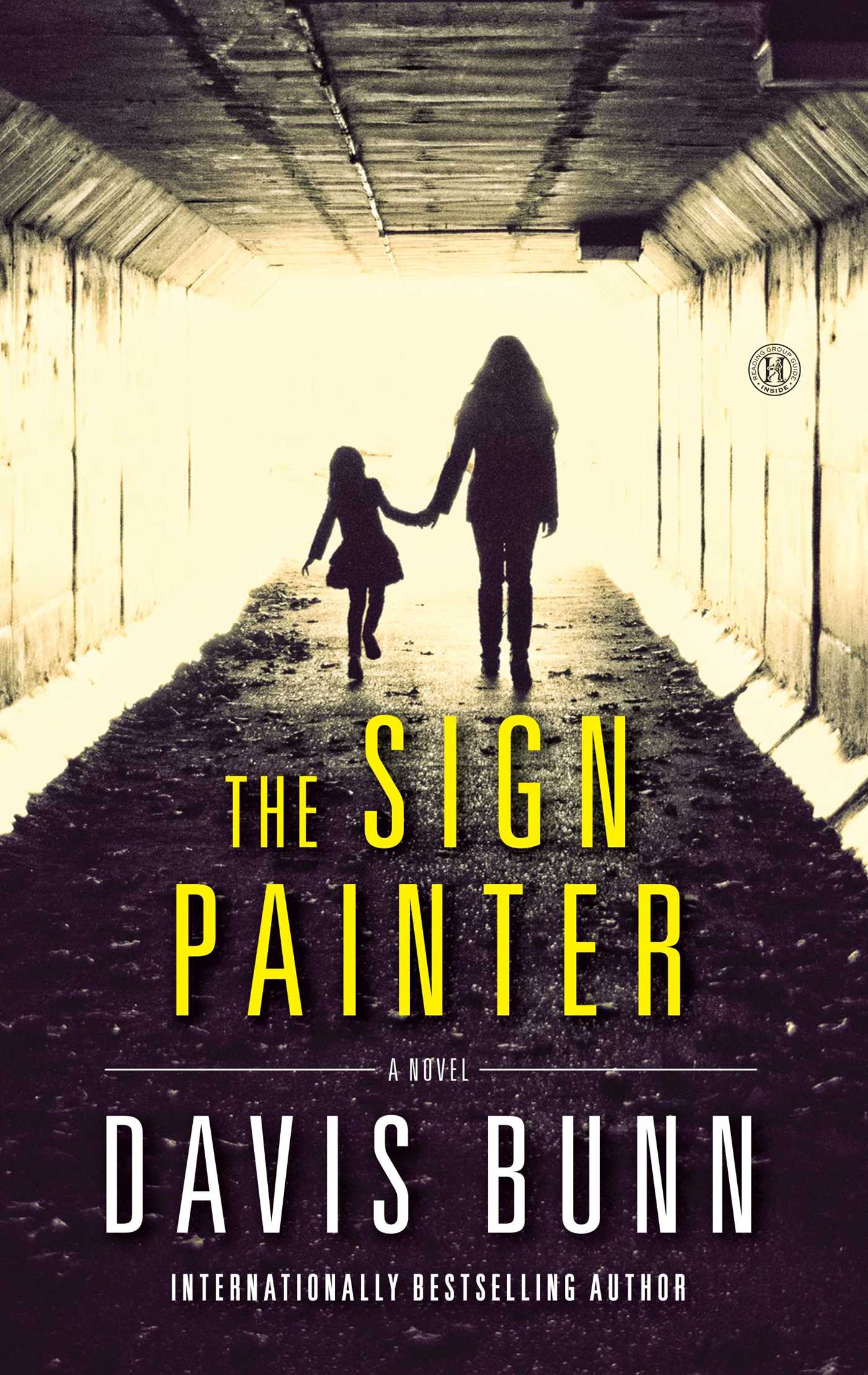
A deeply emotive story about a young mother struggling to get back on her feet after a devastating loss leaves both her and her daughter alone and living on the street—from bestselling and award-winning author Davis Bunn.

Amy Dowell had always considered herself a very good mother. But when she loses her husband to illness and her home to debt, she finds herself and her young daughter, Kimberly, living on the streets as she struggles to find a job that will get them back on their feet again.

When Amy meets Lucy Watts, the pastor in charge of the church program that fed Amy and Kimberly their latest meal, Lucy sets them up in temporary housing and gives her a lead on a job painting signs for a local auto dealership—but Amy is hesitant to let go and trust. Is this finally a legitimate break? Can Amy subject herself to the possibility of disappointment and hurt by hoping again?

Inspired by the true story, The Sign Painter is a tale of desperation, taking chances, and ultimately redemption. This heartwarming novel blends mystery, romance, and characters you’ll root for, will leave you wondering–Is home really where the heart is?

Review

The Sign Painter was definitely one of those books that had a little bit of everything but what I thoroughly enjoyed was the central story surrounding the character Amy Dowell. So many people when they hear someone is a single mother, immediately stigmatize and judge them without ever having been in there shoes. Amy could be anyone you know and her story is one that can happen at any time. One day her life changed and a series of events left her homeless with her daughter. 

As a reader, you can’t help but fall in love and root for Amy. She and her daughter, Kimmie, have experienced their fair share of obstacles. After the death of her husband, life took a nosedive but despite that, she held onto her faith with the aspirations of reclaiming a stable life of security for the both of them. Not having any support system or means to better, she didn’t rely on anyone but worked hard to get make things better. Working odd jobs here and there to support the both of them, by luck she came across a woman named Lucy, who was part of a church where her instinct and compassion kicked in to give Amy a chance to rebuild their life.

Lucy represents what I wish more people in this would do. I really enjoyed the story that developed between the two of them. Lucy completely embodied everything about paying forward. This really made you want to grab a Kleenex. I know many people out there are struggling with religion and more specifically the role a church plays reaching out to the community. It was really nice reading a character who on a leap of faith, more intuitive instinct, saw someone who really needed a helping hand, put themselves out there for them so they could have a chance. People come into your life at the right time for the right reason. Sometimes we have to go through some things but at our darkest hour, when we least expect it, we find light. Through their inspirational friendship, we see Amy grow and get the life she was trying so desperately to have. 

Now, the book did have a little bit of action going on that spiced up the book. Amy was witness to something that opened up this who saga that brought some excitement to the book. I don’t want to be a party pooper but I could’ve done without this. Not that it was terrible or anything but there are other characters that had aspects of their lives that I think we could’ve delved into that would’ve been just as interesting. Nonetheless, it gave a little excitement to an already enjoyable read.

Bunn inspires with a novel of hope and gives a face to those who have faced similar obstacles that you keep working hard to rebuild your life even when each day seems like a better day is unreachable, faith sometimes is all you have to hold unto. He shows us how this single mom despite the odds against, held onto hope and through hard work and determination lived each day harder to make life better. I thoroughly enjoyed the book and the message that offers to readers. I would recommend this book to read.

Reviewed by Michelle Bowle
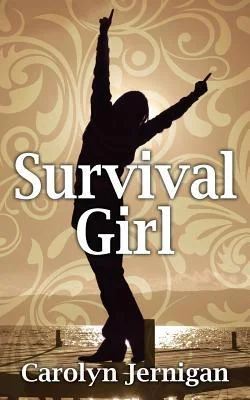
Review: Survival Girl by Carolyn Jernigan

Available on Amazon and Barnes and Noble

Available on Amazon and Barnes and Noble

About the Book

Your journey in life is not a fly on the wall nor a dream what I can tell you though it can be regrettable most definitely unchanging. The last second of your actions just became a memorable moment or not. Reality Check: 1. Are others experience an example for you-if breathing it could very well be so. 2. Recognizing a trouble individual coming your way-after reading this it's possible. 3. Releasing love is the best cure for a self-pity somebody found out while other never did. The best ruler of your life is you (and most of all of course God) even if you father or any guidance shows little loving support because truly ultimately there a space in life that nobody can inhabit but you no matter how hard they endeavor. Achievements are for everyone whether that around your family or around strangers or living by yourself. And don't be so quick to throw out your best friend over slipups that can be pardoned. Therefore do yourself a huge favor think twice before making a drastic decision once said it carried forever in one way or another. Really the blame game it a temporary felling that blow away with the wind. Challenges sometime have to be embrace to go the next phase.

Review

Just as all fairy tales do not end in happily ever after, ‘Survival Girl’ did not make it to the metaphorical finish line, either.

‘Survival Girl’ follows Tanya from childhood to adulthood as she tries to make her way despite abusive parents, unreliable friends and unstable relationships. The readers initially want to see poor Tanya succeed but, as Jernigan shoves Tanya through awkward grammar and forced conflicts, we easily become disenchanted with our protagonist. 

The characters that inhabit the story have the spirit of real people behind them, and it is clear from the first word that Jernigan is drawing from real life experience to inspire her characters, settings, and conflicts. A number of supporting characters were relatable, level-headed and entertaining but, unfortunately, I cannot speak for Tanya in the same way. As the story progresses, Tanya is fooled, beaten both physically and mentally, and the butt of the joke more often than not; she does not survive so much as she gets tossed around by the waves. All throughout the novel, Tanya reaches out for someone who can truly love and respect her but, as is clear throughout the narrative, Jernigan is not one of those someones. 

For one, the novel is riddled with grammatical and punctuation errors, clunky dialogue and narration, and an impressive amount of semicolons; the novel as a work of literature was difficult to slog through. As a specific example, when new characters were introduced in the beginning of the book their names were bolded, but this style was immediately dropped after the second chapter and not corrected. Jernigan also does not treat her characters, the story, or even the readers with the respect they deserve. Conflicts were clumsily shoehorned in and then randomly abandoned as Jernigan thought of new ones. Every story has some kind of plan or goal from the beginning, but ‘Survival Girl’ has no clear direction or purpose, and suffers an ending so anticlimactic there was not even a period after the last word.

There are such things as good stories told poorly and subpar stories told well. Stories, whether they be bound in paper, watched through a screen, or even simply spoken aloud can, and do, mean a lot to people. The fact that we can bring new, fully formed people and places into existence with just our words will always be amazing to me. Storytelling requires work, care, and nearly obsessive attention. No matter how lacking a story is, the author has the obligation to nurture and care for the narrative just a mother cares for a child. Jernigan starts the story off with good intentions but, in the end, does not respect her characters enough to put in the effort to have her story edited. 

Maybe, in some other life, Tanya and her family and friends do find a happy ending. Until then, though, they’re stuck kissing frogs. 

Reviewed by Catherine Mesure

Review: The Magician's Lie by Greer Macallister

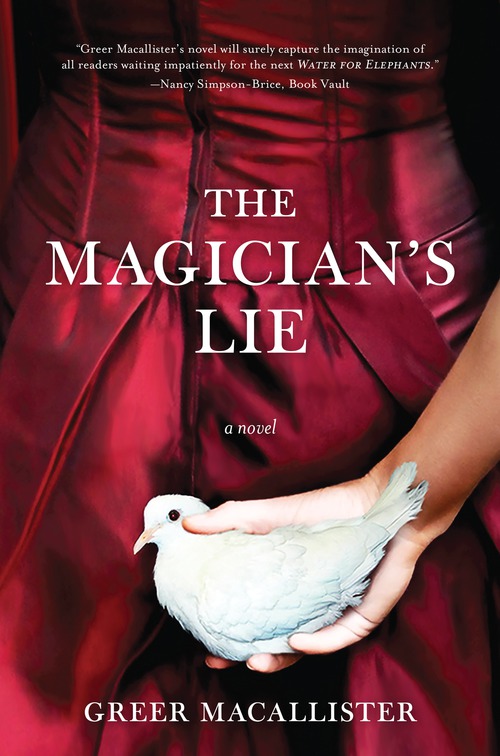
For any and all readers who enjoyed Erin Morgenstern’s otherworldly masterpiece The Night Circus, prepare yourself for another spin on the emotional wheel. The Magician’s Lie is a historical fiction set during the turn of the century, taking place in small towns, golden-age cities, marble mansions, and theaters both small and large. 

The Amazing Arden, a renowned female magician in a world dominated by men, is suspected of murder. After a chance encounter, desperate policeman Virgil Holt overpowers Arden and manages to keep her hostage in Janesville’s small town police station. He needs her to be guilty, yearns to come out the hero of this story, but as Arden’s midnight tale of love, fear, suffering, and strength unwinds in full, a different song rings true. Macallister leads us through two different narratives: the tense standoff in the police station, and the series of events, starting from childhood, that has led Arden to Janesville, Iowa. 

While it is clear Arden is our protagonist, Holt is our proxy. He is our guide, experiencing the world for us. As a result, Arden’s exposition occupies nearly all of the narrative, and Holt’s character is unceremoniously pushed into the wings. What Holt lacks in description he achieves in development, but even his epiphany is hastily brushed aside to make room for Arden.

One of the most striking elements of the novel is Macallister’s objectivity. The Magician’s Lie has no prelude or expositional fluff; she is deep in the rising action of the story by the first page. The story is rich in detail, description, and thrilling entertainment. One can practically smell the silk, sweat and creme makeup, hear the cheering of the audience, and feel the heat from the stage lights emanating from the pages. 

Greer Macallister empowers women and men alike to find their will to live by weaving the yarn of a young woman running a gauntlet of abuse, illusion and love. One of Arden’s motivators throughout the story is her love life, but here Macallister does not back down from her pro-women message. Romance is important to The Magician’s Lie, but it is not all consuming or overwhelming; Arden cannot be defined by her romance, but by her actions as an individual. The Magician’s Lie is an enrapturing and genuinely hypnotising story that is sure to convince readers of the magic on stage, behind the scenes and, most importantly, in themselves.

Reviewed by Catherine Mesure

Review: Colorworld by Rachel E Kelly

Buy on Amazon and Barnes and Noble

To get to know someone’s writing is to get to know them as an individual . After meeting Rachel E. Kelly and her husband personally, I was excited to read ‘Colorworld’. Three busy weeks later, here we are. 

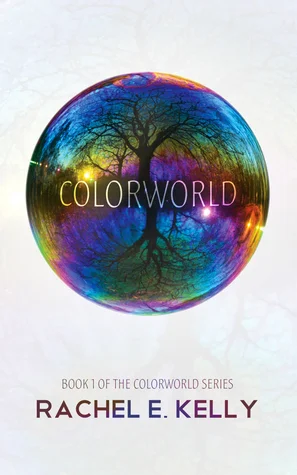
Wendy, our burdened protagonist, is our guide through her spiritually refreshing and self-titled “colorworld”. There is more to Wendy than just the ink on the page, however. Kelly gifts Wendy with so much charisma, sensibility, and minute detail it is clear she loves her characters; they are a part of her. Kelly puts so much of her soul into her writing it is nearly impossible not to cheer Wendy on from chapter one. 

‘Colorworld’ delves into the topic of alternative spirituality, giving great detail to life forces and the abilities we all secretly possess if we reach down deep enough. It is a genuinely original and enrapturing idea that makes the old cliche about using the gun you have introduced into the scene an understatement. No matter what spiritual belief you wear coming into ‘Colorworld’, you will leave with a confident interest in the unseen. 

A great deal of narrative energy is spent on a romance that feels disingenuous and, honestly, is difficult to slog through at times. Wendy and her metaphorical partner-in-crime, Gabe (although I greatly prefer Gabriel), share a relationship that bears real emotional and narrative weight, but the attraction is lost to the reader. The fact that even Wendy and Gabe’s fictitious romance is drawn in loving detail from Kelly’s heart is worthy of a hat tip but, just like the colorworld, is invisible unless you see it from behind the printer. The story tends to feel slowed down considerably at points, momentum lost in the outside-looking-in moments shared between Wendy, Gabe, and Kelly. 

‘Colorworld’ is the first book in the Colorworld series and, after finishing the book, my fears have been confirmed: I need more. It is a ravenous, nerdy need to know what happens next. An insatiable hunger that, left unsated, transforms into wonderful, wonderful obsession. An illustrated edition of ‘Colorworld’ is also available, featuring a menagerie of artists hand-picked by Kelly and her husband. The couple also have a comic edition of the story in the works, and what more reason do you need to read it than all the pretty pictures? 

Reviewed by Catherine Mesure

Review: Life and Death by Stephenie Meyer

Available at Amazon and Barnes and Noble

Available at Amazon and Barnes and Noble

Finally, another reason to geek out about Twilight.

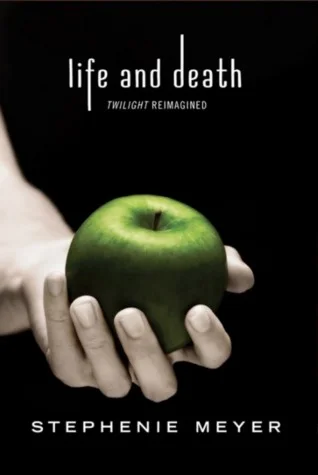
To celebrate the tenth anniversary of the series, Stephenie Meyer released a gender-swapped edition of her original story. Why? To make a point that Bella was not just a damsel in distress needing rescue from her vampire boyfriend; vampires are scary, no matter what their supposed gender roles are. Nearly all of the names and genders have been changed, but it is not just a cut-and-paste job. Quite a few plot points have been altered, as well. 

Be still, my heart.

This second time around, Meyer has the opportunity to improve what tics she felt the story had, and what an improvement. As a stand alone story, Life and Death has well thought-out,  comedic moments, artfully slid in among the gloom of Forks. Beaufort (Bella’s doppelganger) is a more outgoing, sarcastic version of Bella, but this is not necessarily an edit. The new characters are nearly just like their Twilight counterparts, if not for some tweaks and surprising characteristics that set them apart. One of the most exciting treats is the new perspective we view the Twilight universe with. Those cracks or angles we missed with Bella are explored by Beau, and this new light casts intriguing shadows. 

Whether Meyer knew it or not, her readers (myself included) expected the same show with different players. She had to know, because the twists and sharp turns the novel takes are sheer, cackling brilliance. There were times when I was torn between not breathing and, “Why didn’t I think of that?”

Nevertheless, even flawless vampires have their faults. Life and Death is a story unto itself; it has no sequels. As result, squeezing all of the Twilight universe into one novel is not an easy task and, although I applaud Meyer for her work, a good number of characters, scenes, and elements got the short end of the pencil. Some of the integral characters that are included in the narrative have little to no character development, and their relationships with Beau and other characters suffer similarly. Also, the novel’s young-adult genre label reveals itself in Beau’s and Edythe’s (Edward) romance, their emotions cutting to the chase without any real insight into the causes.  It genuinely feels like Meyer relies on our knowledge of the previous books to fuel the urgency between our star-crossed heroes. 300-some pages is nowhere near enough to capture the relationship between Bella and Edward’s four-book romance, and besides: Beau is more reasonable than Bella. Love at first sight does not feel to be his metaphorical cup of tea, but would we really have a story, then?

Among all the cut corners, though, Life and Death is a genuine joy to read. Meyer also seems to have just as much fun as her audience, re-imagining the vampiric world that captured our attention ten years ago. For all Twilight fans, Life and Death is a definite must-read, if not an automatic impulse purchase (like your’s truly). So run, don’t walk, and read it right now. Run like your mother is being held captive by a vampire that wants to track you and subsequently drain your delicious blood.

Reviewed by Catherine Mesure

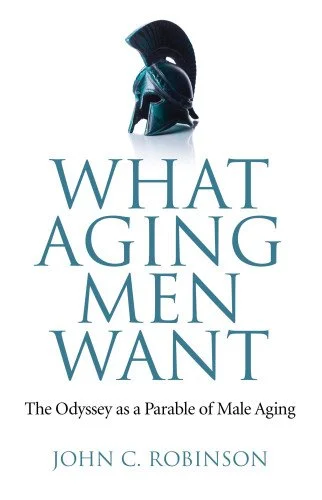
Review: What Aging Men Want: The Odyssey as a Parable of Male Aging by John C. Robinson

Paperback: 169 pagesPublisher: Psyche BooksAvailable at Amazon | Barnes and Noble

Paperback: 169 pages
Publisher: Psyche Books

Available at Amazon | Barnes and Noble

So, what do aging men want? This questioned pondered throughout the book and brought me thinking about a few things as I turned the pages. I was a bit skeptical about comparing classic literature to this question but I was thoroughly impressed with the attempt. Author John Robinson paralleled the transitional stages in a man’s life to the chronicling life experiences of Odysseus in the Odyssey which he believes “reveals the DNA of male aging and a prototype for man’s possible elderhood.” 

Specializing in men’s issues as a psychologist, Robinson interviewed forty men that ranged in ages of 60 and 85, through groups and individual interviews. He wanted to show the struggles of what men go through and give a community where they could relate their shared experiences and understand what they authentically want. Deeply inspired by the Odyssey, the book can be interpreted from a variety of perspectives but mostly through the journey of a man’s life and his search for personal meaning later in his life.  

The concept of the book I thought was fascinating on two levels. One, I’d never seen The Odyssey rearranged liked that so it gave me an entirely new appreciation for story it tells and I thought that Robinson interpreted the works so intelligently to parallel the struggles of men with something that many have had  a hard time coming to terms with could relate and find interesting. Using such a masculine figure and seeing the trajectory of his life from the pov of a male reader can be of comfort through seeing the similar experiences. I found much of the commentary in the book insightful as well as an enlightenment of shared wisdom. It was fascinating reading his interpretation of highlights of what he drew upon from the challenges complemented by his own shared experiences. The only part of the book that I found a bit displaced was following each chapter the growth questions.  I thought it would’ve been more appropriately place in the appendix as a resource rather than after each chapter. Robinson had such insightful commentary that I thought it distracted the continuity of the moments.  

Overall, I found the book fascinating and it definitely will inspire conversation amongst men who are this demographic. Even the though the book isn’t geared towards women, I think the core message of what the book represents can be absorbed and appreciated. So, if you are wandering the answer to my initial question, this was book was a good starting point. 

Reviewed by Michelle Bowles