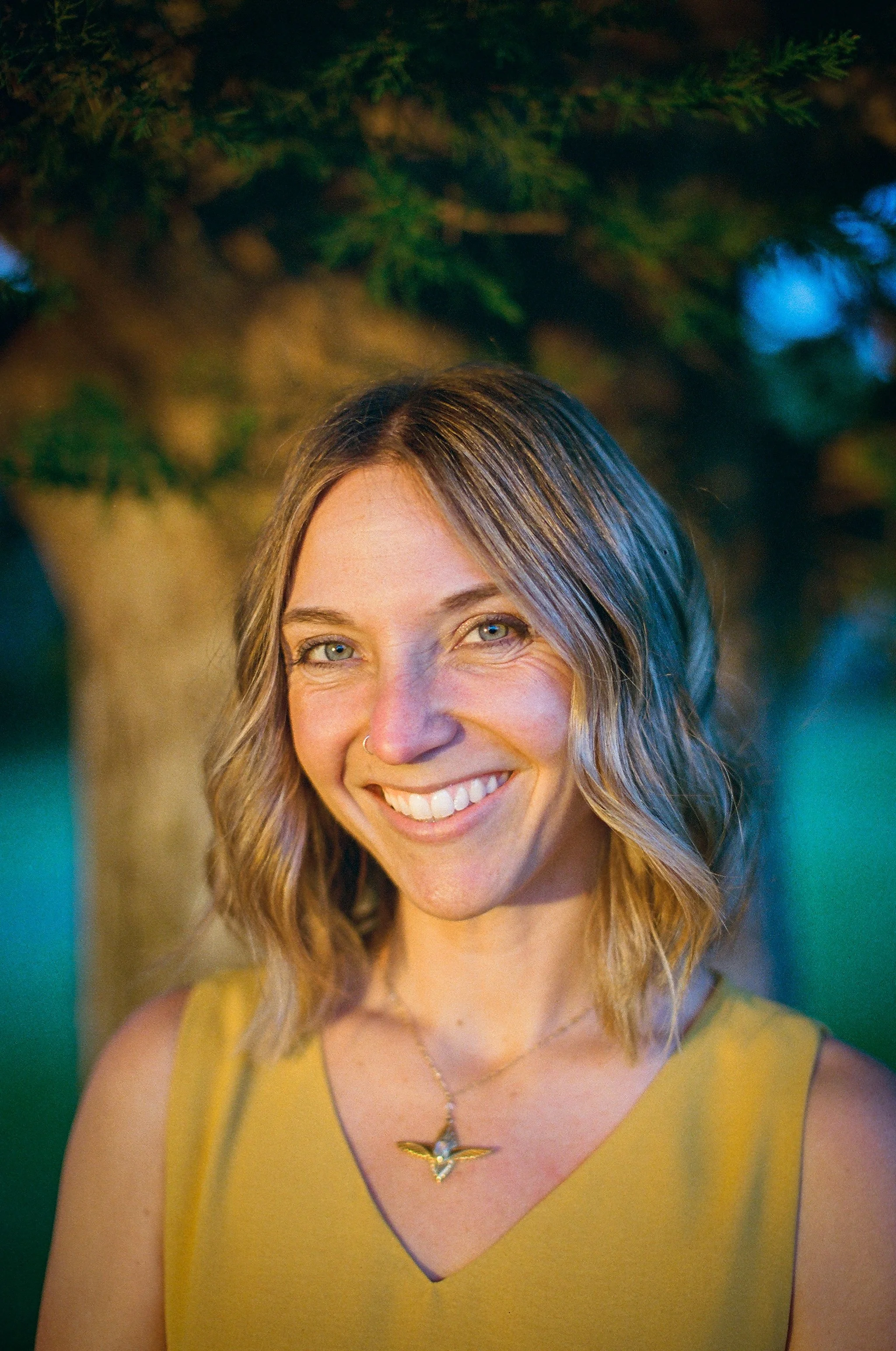
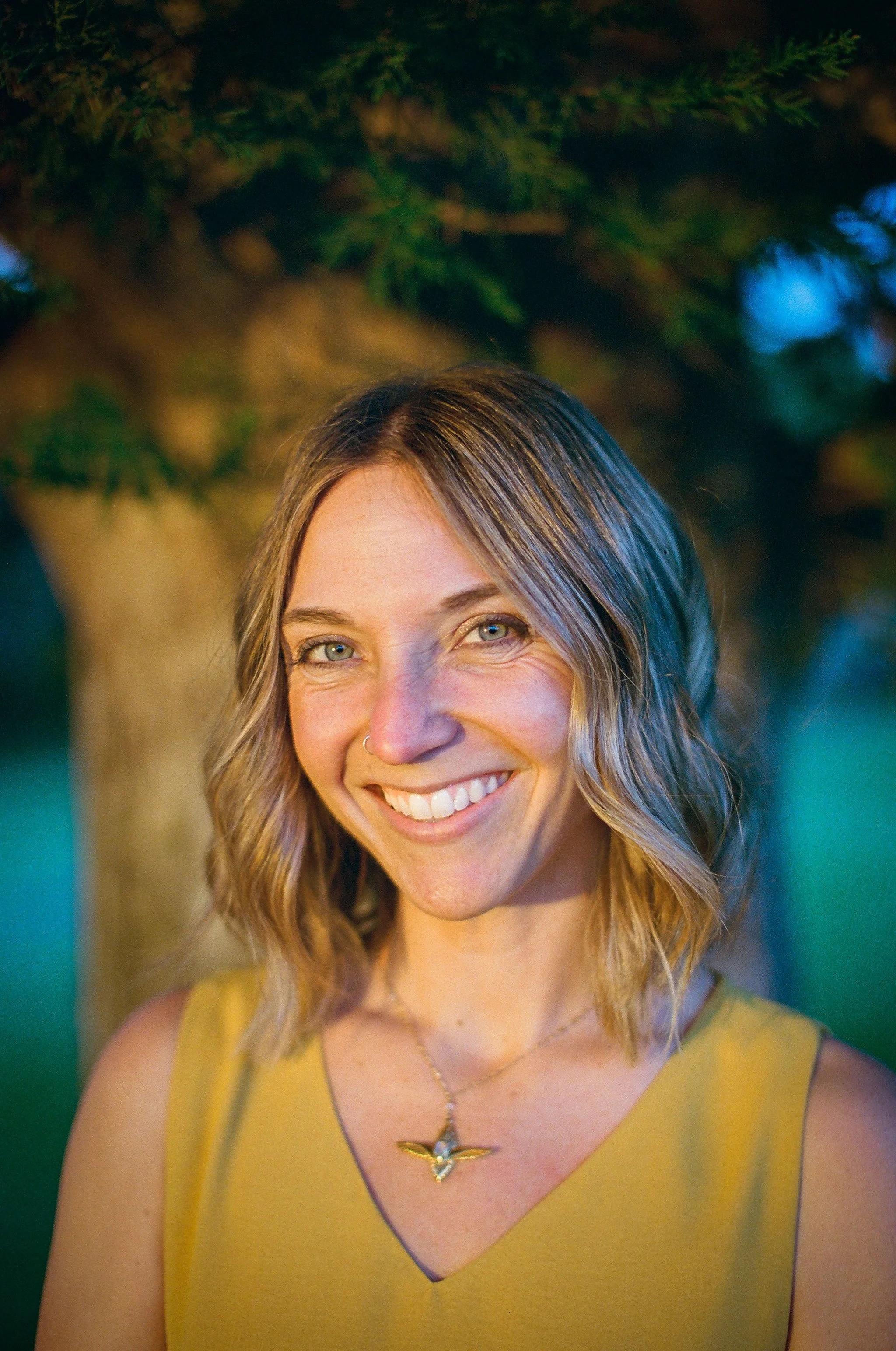
Q&A with Sarah May, She Journeys

She Journeys is such a deeply personal memoir. What was the turning point when you knew you were ready to put your story into words?

The honest answer is that it wasn’t so much a personal turning point as it was the changing of life circumstances that aligned to give me the time and space to finally write She Journeys. I knew I wanted to write a book about my divorce and subsequent healing from the beginning, but it would take seven years to even begin that process. Life was busy, I was working three jobs and had very little free time. It wasn’t until I left those jobs, sold my belongings, moved into a van I built with my partner, and set out on the road that everything changed. I discovered that for me, creativity required openness, space, inspiration. Van life gave me that. I’ve now lived in the van full time for the last five years, four of which were spent writing and editing this book from America’s public lands. I felt a deep level of safety living in a home I built and loved, being held and inspired by nature, being in a loving, respectful partnership, and having amazing support in the form of healers and teachers; all which allowed me to go to hard places and tell the story I knew I had to tell.   

Writing about infidelity, divorce, and trauma can reopen wounds. How did you balance honesty with protecting your emotional well-being while writing? What was the most challenging chapter to write? How did you decide to keep private vs public?

Writing memoir is not only to remember, but in some cases, to relive. Revisiting the past was painful and there were many triggering, difficult moments. But I had the safety, support, and tools to navigate the emotions, pain, and shame. Cracking open old journals and cringing at my own codependence, dysfunction, and denial, watching or listening to interviews from the time of the helicopter crash, it all brought up so much, but this time I had the space, perspective, and ability to navigate it. When it got to be too much, I took breaks and sought support. The hardest chapter to write (and read out loud for the audiobook) was Chapter 12 titled Terror. It was my intention to be as honest, raw, and vulnerable as possible so I shared almost everything except details that would infringe on my ex-husband’s identity or privacy. 

Your book explores the shattering of expectations. Looking back, what expectations were the hardest to release—and which became the most liberating?

When I was married at twenty-one, I truly believed I’d found my soul mate, my forever person, my life partner. I expected him to honor his wedding vows and I expected to be in a relationship of loyalty, trust, and love. But in just two short years, I would come to see that words mean little and that behavior is the best testament to someone’s character. So ultimately marriage, this thing I expected to be wonderful turned out to be the most painful and debilitating experience of my life. A living nightmare. That was hard to grieve and a hard dream to let die. I held on for a long time. Learning that love does not mean pain and betrayal isn’t a reflection of self-worth was liberating, but it came at a big cost. 

You describe healing through therapy, spirituality, travel, and even living in a van. Which of these experiences most surprised you in how transformative it became?

All of them! In their own ways each of these aspects of my life were deeply transformative and healing, but in different capacities; many of which I didn’t anticipate at the outset, but discovered along the way. Stepping into a yoga studio and fumbling my way through class taught me that I was stronger than I knew. Travelling across the country showed me how capable I was and how reminded me of how beautiful life can be, how good it can feel. Therapy taught me how to name my emotions, to process in a healthy way, and to address the trauma, pain and stories of the past. Van life gifted me the time and space to finally write my book, to slow down, and to enjoy life. Plant medicine has helped me heal somatically and psychically in ways that continue to blow me away. I believe that there are so many paths to healing. There’s no “one size fits all” or one right way. Whatever resonates or helps may be different for each of us, but the healing path is the most important one we can take.  

“From wounds to wisdom” is such a powerful phrase. What does wisdom look like for you today compared to when you began your journey?

I love that expression, because I truly believe that if we can take our wounds and make some kind of meaning, or take some kind of learning then we are choosing to be more powerful than our pain. Taking personal responsibility for my life, my happiness, and my healing was a pivotal moment for me – asking “what role did I play in my own suffering?” changed everything. Instead of blame and victimhood, I began to tell a different story – a more empowered one. I have a lot of compassion for the girl who was stuck in the story of her wounds after so much heartbreak, but I have even more respect for the woman who chose to find freedom, peace, and forgiveness. Hers is story I’m most proud to tell. 

How did traveling across the country change your relationship with yourself?

I was twenty-three when I packed up my car and set out on the road during my divorce. I was still numb from shock and trauma and depression, but that trip became the foundation for my new life. Having experiences (even if they were scary and vulnerable) like camping alone, backpacking, and travelling solo were so empowering and showed me how capable and strong I was after feeling so devastated. The road gave me space to reflect and process, nature gave me inspiration and wonder, my body carried me to some amazing places. Whether it was a campfire under the stars or swinging in my hammock strung between pines, I slowly came back online and fell back in love with life. Most importantly, I awoke to the possibility of a future that could be so much brighter and lighter than the past I left behind. 

Your story is both deeply personal and universally relatable. What do you hope readers—especially women navigating heartbreak—take away from your journey?

I wrote a book that would have given me hope in the midst of my heartbreak. Pain can be isolating, and trauma can be so disempowering. I hope that my story can help other women feel less alone and to maybe even be inspired about the life that could be waiting. My own heartbreak was the gateway to deeper homecoming. 

If a reader walked away remembering only one lesson from She Journeys, what would you want it to be?

It never matters how we begin again. Only that we do. When our lives fall apart or we lose what we think is our “everything” and we aren’t sure how to go on; the only thing that matters is that we do. We pick ourselves up off the floor, we get out of bed, we leave the relationship, we take the next breath, put one foot in front of the other. It doesn’t matter how messy or imperfect we are or how many mistakes we make, the only thing that matters is that we have the courage to embark on the journey ahead. There is always hope. Always. 

Finally, as you look ahead beyond this memoir, what parts of your own story are still unfolding—and how do you see your path forward?

I’m still on the road and loving van life with my now-husband who is also an author (Andrew Singer who wrote Now Is the Time: A Van Life Road Trip). We are on an independent bookstore tour promoting our books, meeting amazing people, and sharing our stories. It’s been an amazing year finally putting She Journeys out into the world, but I’m looking ahead to what might come next. I’m excited to share healing offerings like workshops based on themes in the book, a Divorce Ritual, and private sessions to support others on their own journeys of healing and transformation. I’m dreaming up the next book and the next adventure! 
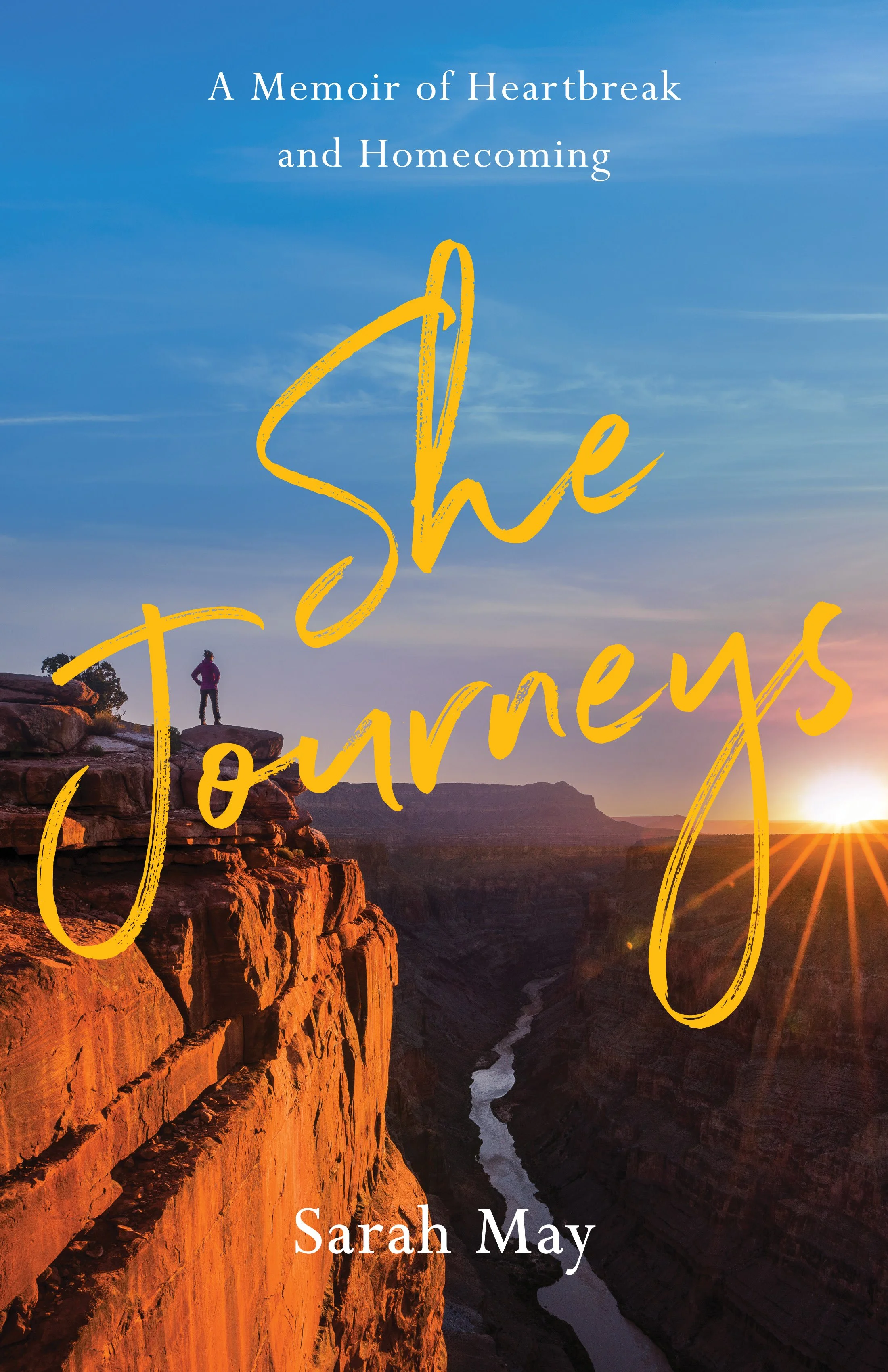
About her latest book, She Journeys:

Few things can shatter our hearts like expectations. Sarah expected to live happily ever after. She expected her husband to honor his vows. She expected his military helicopter to land safely. But when the unimaginable occurred and her world unraveled completely, the undoing of her expectations left her on her knees, fighting for her life. To save herself, Sarah packed her car, and set out to hike across the country. But pain, codependence, and trauma challenged her as she moved forward. Her journey took her from a sailboat to a yoga studio, from a therapist’s couch to a shaman’s ceremony; eventually selling everything and moving into a van, Sarah rebuilt, from the inside out. “She Journeys” is a testament to the transformative power of healing. From darkness to light, from a marriage ended to a life reclaimed, we are reminded that it never matters how we begin. Only that we do. From wounds to wisdom, She is every woman who must find her way from heartbreak to homecoming.

Buy on Amazon | Bookshop.org

Get to know Sarah:

Sarah May is a yoga instructor, Reiki healer, and intuitive. She provides her clients with powerful practices and healing insights from the studio to private sessions, retreats, and women’s circles. Sarah received her Master of Science in Conflict Analysis and Resolution and previously managed a non-profit. “She Journeys” is her debut memoir. In 2020, she and her husband—fellow author Andrew Singer—converted a cargo van and hit the road. They spend their time exploring and writing across America’s public lands. When not on wheels, Houston and San Diego are her homebase. Learn more at: www.shejourneys.us
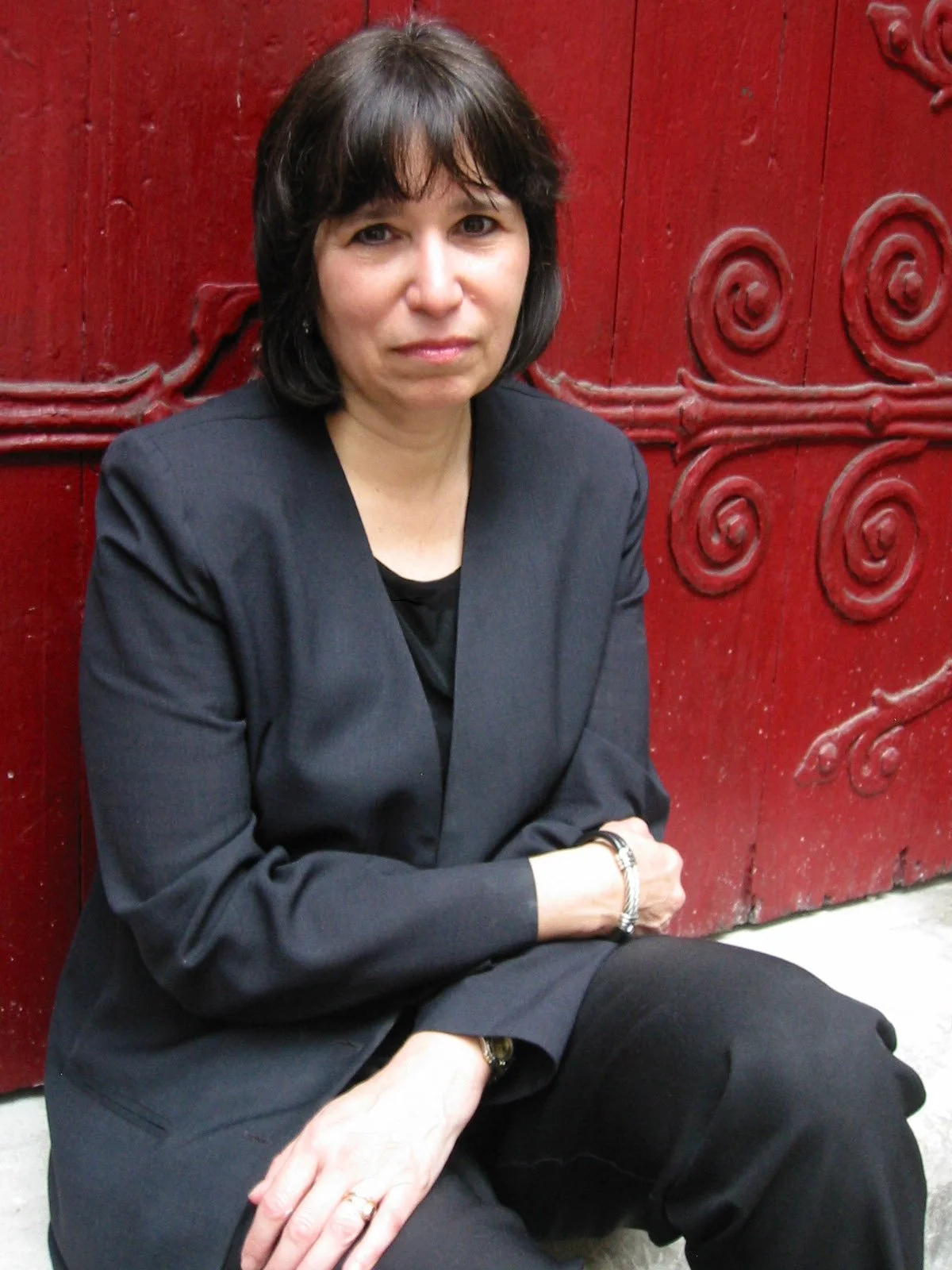

Where I Wandered by Eleanor Lerman

When I was in elementary school, my teacher handed out a poem that had been copied onto a sheet of paper. The poem was “The Road Not Taken” by Robert Frost, which ends with these famous lines:
“Two roads diverged in a wood, and I—I took the one less traveled by,And that has made all the difference.”

We discussed the poem, answering the teacher’s questions about what we thought might happen if there were two roads ahead of you and you chose to take the one that fewer people traveled. We probably spent an hour or so with Robert Frost and then turned our attention to other things. I didn’t know it then, but as time and the years went on, those few lines became a kind of touchstone for me. At the time my class read that poem I was just one of a group of nice Jewish girls in my Bronx neighborhood who had no intention of doing anything other than taking the same road that everyone else took—that is, until mother died of cancer when I was thirteen and everything changed. I remember very little about that time because my father, who had no idea of how to cope with raising my younger brother and me all by himself, went out and found a new mother for us within a couple of months and told us to forget about the old one. He hid her pictures and any other traces of her in our apartment. Scared, confused, and with no idea of how to do anything but what we were told, my brother and I followed his instructions until, years later, we began to have conversations that eventually loosened our father’s hold on us and slowly let the shadowy memories we had of our mother back into our lives.

But in the early days after my mother’s death I had to return to school, which is when I had my first lesson about how it feels to be different. I was the only kid in my class with a dead mother and so I stood out among my friends, who all lived in normal, two-parent households. One of the most important things a young girl wants is to be like everyone else in her group but now I was different, and that made me feel ashamed. I didn’t want to stand out in any way, but I had no choice about what had happened and that made me angry. As time went on though, I began to actually lean into my new identity as the angry girl. The thought in my head was something like, You think I’m different? Well, I’ll show you what being different really means.

For me, that meant following the music I heard on the radio—which had morphed from gentle pop songs into rock and roll—down to Greenwich Village, where I wandered around by myself. I think my father was still too dazed to even notice I was gone most nights, while I learned to dress myself like a vagabond with long black hair, kohl-rimmed eyes, and bell-bottom jeans. In the Village, everybody was different and so I fit in. I roamed around from the hippie haunts on West Fourth Street to MacDougal Street to the then-hidden addresses of the gay clubs further downtown. I was neither this nor that; I learned it didn’t matter to anyone in this new world who you were or what lonely road had led you there. Come join us, everyone said, from boys in bands to drag queens roller skating down Christopher Street, and join I did. Home felt so dangerous and crazy that the further away I got from it, the safer I felt.

The reason my home life seemed dangerous to me was because soon after my father’s marriage to the new mother, she began to exhibit mental health issues—depression, anger, and an inability to provide any sense of normalcy at home. For example, much of the time no one bothered to make dinner for us so my brother and I ate a lot of macaroni and cheese or remnants of the school lunch that we brought home. Also, the new mother was always angry with me because I wouldn’t include my new stepsister, Jackie, in whatever I was doing. Jackie was two years younger than me and teenagers don’t generally take their little sister with them, even if they’re doing nice, normal teenager things, which I clearly wasn’t. And, after the first year or two that we all lived together, Jackie wasn’t behaving like a normal person, anyway.

I now understand that she had developed schizophrenia (an illness that can often appear during puberty), and though I didn’t know what to call it at that time, I could see that there was something very wrong with her. She was violent, she talked to demons, she drew crazy pictures on the living room walls, she ripped up her clothes, either refused to eat or else ate until she gained nearly one hundred pounds. My stepmother wouldn’t let anyone erase the pictures Jackie drew on the living room walls (which were things like huge, staring eyes or big, blank faces) because she said this was Jackie’s art and her way of expressing herself. She also insisted that Jackie’s problems were caused by low blood sugar, exacerbated by the fact that I wasn’t being nice to her. Very soon, I was making plans to get out of that house.

Meanwhile, my anger was getting to the point where it was taking over my life. I was angry at my mother for leaving me, angry at my father for bringing the new mother and her dangerous daughter into our lives, angry at everything and everybody—except my brother, who I wasn’t supposed to talk to anymore unless we included our stepsister, which was impossible unless we wanted to include the demons, too. (We didn’t.) To make matters worse, we moved from the Bronx to what was then a dying beach town at the edge of Queens. My home life became more and more chaotic; there were nights when my stepsister would be walking around with a knife, threatening her mother while the two of them screamed at each other. I was hiding in the basement of our new house, watching Star Trek and wishing I could explore the stars with Mr. Spock; my brother was locked in his room filling out the paperwork to get loans for colleges in a far-away state. My father’s solution to the madness in his household was to appear in the living room and ask us all to join him in his bedroom to watch “Wheel of Fortune,” and that’s what we did. My stepsister put down the knife for half an hour. My stepmother rested her screaming voice. My brother and I crept out of our lairs and sat on the bed with the rest of them, ready to bolt at the first sign of trouble. It was these nights that taught me how to avoid reality and pretend everything is fine. Fine, fine, fine.

I left when I was eighteen. As I was walking down the hallway that night with a bag of clothes and my notebook full of the poems I had begun to write, my father, seeing that I was going out and remembering that he was supposed to try to exert some sort of control over me, asked where I was going. “I’m leaving,” I said. He then asked when I would be back. “Never,” I told him. And I was gone.

I went back to the only place that had felt like home to me since my mother died: the Village. I had already found a job there, managing a workshop that made parts for harpsichords. The job came with an apartment upstairs, which meant I was living a life that would not be possible in New York City today, because where would an eighteen-year-old who barely graduated high school find a job that also came with a small apartment that rented for a few hundred dollars a month? Apparently, fate moved in with me too, because our neighbors, who lived in an old carriage house on a cobbled lane behind our building, had to walk through the workshop to get their mail—and that was how I met Harrison Starr and his wife Sandy. Harrison was a film producer and Sandy was an art historian. There was a blackboard in the workshop where I was supposed to make a list of parts we needed to order for the harpsichords, but instead, I wrote poems on it. Harrison would stop to read the poems and one day, he suggested that I try to get them published. That had never occurred to me—it seemed impossible, like something real writers did—but because Harrison encouraged me, I sent the poems to Wesleyan University Press and in 1973, when I was twenty-one, they published my first collection of poetry, Armed Love. Because of the unexpected notoriety that book brought me, and because Harrison and Sandy invited me into their lives and introduced me to their friends, a wide circle of artists and writers who were all extraordinarily kind to me, I began to believe it was actually possible to become something more than a lonely, angry young woman scribbling poems on a blackboard.

When he was sixteen, my brother left home to go to college in Massachusetts and we re-started what became our lifelong conversations about our broken family. He was the one who called me on a weekday afternoon and told me to turn on the television, where I saw my father and stepmother on a national talk show. My father was wearing a maroon suit with coffee stains on it; my stepmother was wearing a lot of makeup and had a beauty parlor hairdo. They were pleading for help to find my stepsister, who had run away from home. At one point, my stepmother held up a candy wrapper she claimed to have found in the bedroom I had shared with my stepsister, insisting this was proof that her daughter must have been abducted by people who made her eat chocolate, which had affected her blood sugar level and thus made her pliable enough to let them spirit her away.

Time went on. I left the workshop. Harrison and Sandy moved to California. I got a job as an editor for a philanthropic foundation. My brother was living in Washington, D.C. and I stayed in New York, but we kept on talking. Our conversations were more about work now: he was a journalist who also became the producer of America’s Most Wanted for many years and the co-author of numerous non-fiction books and articles. Along with my day job as an editor, I had gone on to write a number of novels, along with collections of short stories and poetry. On the surface, everything was going well—but behind the scenes, my mother’s death was like a bomb that continued to explode in my mind over and over again. While I had become very good at pretending to be a normal person, I really wasn’t. No matter what kind of success I had as a writer, no matter what awards I won or praise I received, I couldn’t feel that any of it actually applied to me, the me that was still lost, still wandering down some lonely road wishing I could find my mother. I didn’t remember her, I didn’t remember her voice, I could hardly remember any time she had embraced me, or told me she loved me, and without these things I felt unmoored from my own life. Nothing and no one felt safe to me. And the older I got, the worse these feelings became. How could I still feel that I needed my mommy? It was embarrassing. It was as bad as walking into the classroom as The Only Child With A Dead Mommy, and I didn’t know how to make myself feel better.

When I was in my forties, my stepmother died. A few years later, my father died. They had been in separate nursing facilities for some time—my father because he had serious health problems; my stepmother because she had dementia and had become dangerous to herself and everyone around her. My brother and I had divided up the chore of taking care of these two people: he dealt with my stepmother, I managed my father’s journey from one nursing home to another and then finally, to the hospital where he died. Almost up until he had to go into a nursing home, my father was still carrying out the task my stepmother had assigned him, which was to visit morgues and view the bodies of dead girls who fit the description of my missing stepsister. He never found her, nor did the police or any of the private detectives my parents hired, and to this day we have no idea what happened to that poor girl. (There’s another story to be told here—much too long and complicated for this brief essay—about the near-impossibility of getting help for people afflicted with mental illness and the tragic effects that failure has on families.) 

After both my father and stepmother were gone, the conversations between my brother and I turned back to our childhood because we were both still struggling to deal with the effects that not only our mother’s death but also the breakup of our extended family had on us. Before my mother died, two sets of aunts and uncles along with my six cousins and my grandmother all lived in the same Bronx tenement. But one of my uncles—my mother’s brother—blamed my father for my mother’s death because he felt that my father had not found the right doctors to treat her. Eventually, everyone moved away and though my brother remained close with all of them, I did not. I was too angry at everybody to try to preserve those relationships and too young to imagine the effect that losing these people who I had loved and who I saw every day of my life would have on me. It was as if along with my mother, the rest of my family had simply disappeared.

Anyway. The time came when only one of our aunts was still alive. My brother arranged for me to see her to talk about my mother. My aunt said that the only thing my mother cared about when she knew that she was dying was my brother and me. Over and over again she kept asking, “Who will take care of my children?” I guess she knew my father wasn’t a good candidate for that job.

When I was on the train going home that day, I kept thinking of my mother worrying about who would take care of my brother and me. I called him and told him about this and he said, “You know the answer to that, and mommy must have, too. We were always like Hansel and Gretel, wandering through the dark forest, hand in hand. We took care of each other. We took care of ourselves.”

Somehow, just hearing him say that helped me a lot. Somehow, that made a connection between my mother and me that I had needed for the longest time. Before she had gotten sick, my mother bought me a typewriter, a little gray manual that must have been a big expense for a woman who had to run the household on very little money. In the year before my mother died, I wrote an endless number of stories on that typewriter (in particular, I remember a Major Work about a horse named Champion) and my mother gave me a manilla envelope to keep my stories in. I still have the typewriter and the envelope full of stories which, someday, I intend to read again. (In particular, I want to find out how far along I got in the Major Work.) When I realized that giving me the typewriter meant that my mother must have understood who I really was and that I was going to be a writer, helped me with what I have finally begun to do—feel grief, real, heart-wrenching grief about my mother’s death. It’s taken fifty years to get there, but at least I can feel it now, so much so that in my new collection of poetry,* an entire section of the book is devoted to an exploration of grief, especially the grief of losing my mother. It was cathartic to write those poems and to think of her while I was writing. It was probably the first time since she died that I let myself feel how much I miss her.

All these years later, my brother and I still talk about my mother and what happened to our family after she died. It helps immensely that we can serve as witnesses for each other, able to testify about how hard it was to pull ourselves out of harm’s way after we lost our mother and learn to make rewarding lives for ourselves. As a journalist, my brother’s job is to tell the truth. Mine is to tell stories. This story, however, is all true. My mother’s name was Lillian. She was born in Boston in 1920 and died in New York City in 1965 when she was forty-four (one month shy of her forty-fifth birthday). I hope she isn’t still worrying about us. The road less traveled was hard to navigate in the beginning but it’s gotten easier as time goes on because Hansel and Gretel know where they’re going now. As most stories promise, they’re going to find their way home.

*Oleander Marriage (Mayapple Press 2025)

About the Author

During a career that now spans over fifty years, Eleanor Lerman has published numerous award-winning collections of poetry, short stories, and novels. One of the youngest people ever to be named a finalist for the National Book Award in Poetry, she also won the inaugural Juniper Prize from the University of Massachusetts Press and the Lenore Marshall Poetry Prize from the American Academy of Poets, among other accolades. In addition, her novels have been recognized with numerous awards including the John W. Campbell Award for Best Book of Science Fiction and being shortlisted for The Chautauqua Prize; recent awards for her short fiction have included being named a finalist for the Missouri Review Perkoff Prize. She has also received a Guggenheim Fellowship for poetry as well as fellowships from the National Endowment for the Arts for poetry and the New York Foundation for the Arts for fiction. Her most recent work, Slim Blue Universe (Mayapple Press 2023) was named a finalist for the Eric Hoffer Medal Provocateur, awarded to “the best on the frontier of poetry—the experimental, the innovative, the daring and stunning, the impromptu in technique and voice.” In 2026, She Writes Press will publish King the Wonder Dog and Other Stories, her collection of new short stories. Find her online at eleanorlerman.com and on Facebook (facebook.com/eleanor.lerman). 

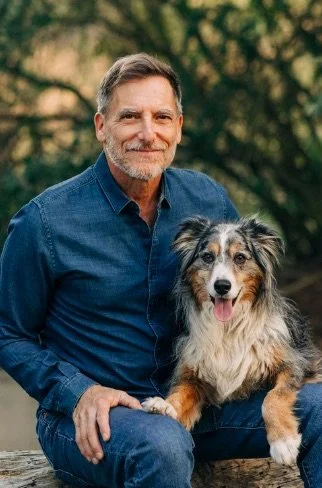
Q&A with Rob Tonkin

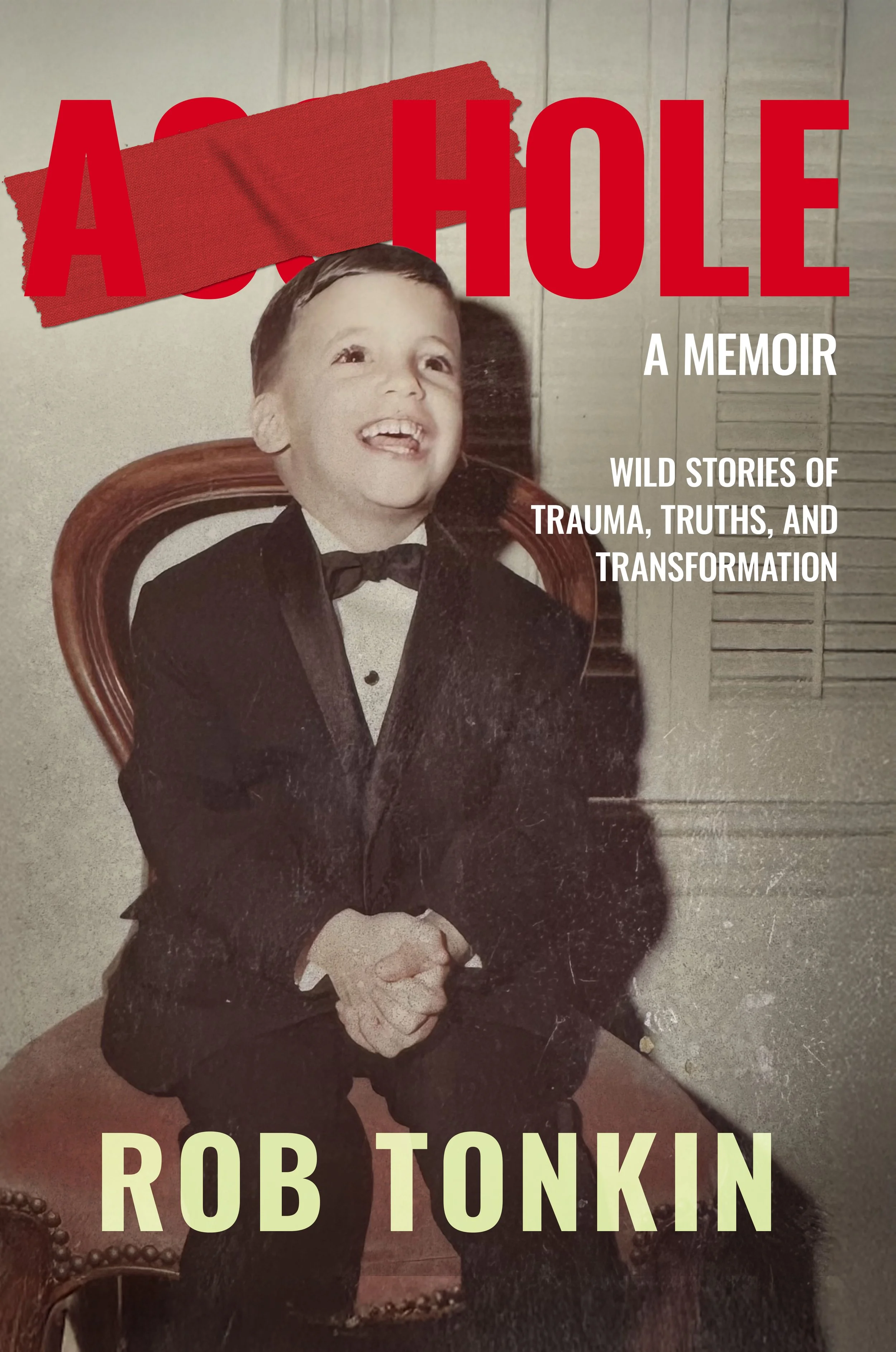
What inspired you to choose the title, and how does that label reflect your journey and the people you encountered throughout your life?

The title is bold, and "the proverbial they" say the title is how people discover a book. As someone who had a career in marketing before I became an author, I can tell you that is definitely a part of it! It also represents a version of myself that I’ve since moved beyond. But "asshole" is a word with a ton of different meanings. For me, it’s a metaphor for how people can treat one another—sometimes unknowingly, sometimes with malice, and often just as a learned behavior.

Two good people raised me, but their treatment of me left a lot to be desired. The betrayals, abandonment, and neglect I experienced, I consider to be asshole behavior. And then I was sexually abused by people I worked for—people who were, without a doubt, assholes. Assholes seemed to be everywhere in my life, and over time, I absorbed it all and became one myself. The book is about how I fell, and what it took for me to rise. It’s not just a history of assholes, but more of a common thread running through the narrative. Ultimately, this book is a mirror for anyone who’s wrestled with masks, the need for approval, and that deep hunger to feel like you are enough.

You describe growing up with privilege but lacking emotional connection. How did that tension between success and emotional isolation inform your early choices?

That tension really gave me the push I needed to become independent and build a life of my own. But in the process, I missed out on a lot of my childhood. As a kid, I lacked the emotional intelligence to navigate the chaos around me, so I found ways to survive. After a while, all the bumps and excitement started to feel normal. I was like an animal constantly in fight-or-flight mode. The tension came from this constant push and pull between pain and redemption. I was drawn to the polished cliques and the glitz of the entertainment industry, yet in the book, I share all the cracks I saw in that shiny facade, both while I was living it and after the dust settled.

You worked with huge names like The Black Eyed Peas, blink-182, and One Direction. From the outside, it looks glamorous—what was it really like behind the scenes? At what point did you realize the glamour didn’t match reality—and how did that realization impact your personal identity?

Most people I met in the entertainment industry were probably dealing with some level of a dysfunctional childhood, just like me. Because of that, the environment felt strangely comfortable. Getting screamed at didn’t bother me the way it might bother others. For years, I was completely unaware, just seeking validation from people higher up in the pecking order. Meeting bands was a rush, like any other compulsion or addiction that makes you feel good—at least for a little while. The bigger the talent, the better the rush. It started with local bands and then had to be national acts to get that same feeling of accomplishment. And then bigger and bigger names to bring the same sensation. Eventually, all of it wore off, and it mattered very little.

For those who think the backstage of concerts is a non-stop party, that's not true. But public figures do have an unfair advantage and are treated like VIPs by almost everyone. Being in their entourage gave me access to similar perks. Some of those were amazing and incredibly fun, but like fireworks, they were fleeting.

How did the mentorship and early abuse you mention shape your work patterns and emotional responses in adulthood?

It most affected my ability to trust other people. I lived from a place of being a victim, and I was attracted to that weakness in my relationships. It also gave me the fuel I needed to manipulate and control situations to get what I wanted.

Looking back as an adult, do you feel if young Rob talked with his dad about the abuse, would that have changed the trajectory of your relationship?

I honestly don’t know. I can imagine my father’s reaction might have made the situation worse. I never told my parents about the sexual abuse I experienced in the late 70s. My father was so conservative that it was impossible to predict what he’d do, and I feared something much worse than simple anger, like total humiliation. I feared he would blame me, or forbid me from working at the radio station and pursuing my dreams, maybe berate me, or use it against me to control me.

I was also afraid he would react in an overly pragmatic way, pulling out a legal pad to get the facts, devoid of emotion, maybe even involving law enforcement. Or, possibly even worse, that he would react with uncontrollable, nervous laughter, as if the pain I was sharing was too absurd to process. I even thought it was possible he would just turn into a silent statue, completely unresponsive. Because of these fears and the lack of a close relationship, that job and my dream of being somebody in the entertainment world became my lifeline, my entire survival system.

Your memoir balanced moments of humor, brutally honest and grit. How did you strike a balance between vulnerability and humor in recounting deeply personal—and painful—experiences? Did it reopen wounds that you healed?

There are definitely some fears that come with sharing a story as raw as mine. I didn’t set out to be witty or to make readers cry. For me, vulnerability has a secret power, and I used that to weave together the words of each wild story. The entire experience of writing the book was both painful and relieving. I revisited many emotional wounds stored deep in my body and mind, which ultimately led to a cathartic feeling, much like the story arc itself.

How did you navigate deciding which stories to include—and which to omit—to create a coherent, emotionally impactful memoir?

The first draft included everything—and I mean everything—totaling nearly 200,000 words. I had the help of a skilled journalist and editor whom I’ve known for years, which meant we were comfortable enough to disagree on things as much as we agreed. They helped me sort through that mountain of stories and text to shape the narrative. But I also kept editing as I went, losing count of the iterations. I rearranged parts and cut entire stories or segments that made the manuscript feel slow. I wanted to make sure each chapter could stand on its own while still having smooth transitions to keep the reader engaged. Then I added more life to scenes with vivid descriptions, levity, and dialogue.

I didn't have a specific reader in mind, but I knew I wanted concise chapters because that’s how I enjoy reading books. So they kept getting shorter, and I kept adding more of them. There’s a satisfaction that comes with finishing a few chapters or a whole section in a short time, and that became my goal—to give readers the same pleasure I find in a gripping page-turner.

Who do you most hope reads your memoir, and what would you want them to feel or learn from your story of trauma, industry culture, and transformation?

There isn’t one specific person I have in mind. I hope my book offers hope to those who believe they’re doomed to a miserable life. My journey is proof that the “defective programming” I received as a kid can be reprogrammed. It’s not easy, and I don’t know any shortcuts. Many readers have asked me for a blueprint, but that’s the core issue—no one, not a skilled therapist or an intellectual, can tell another person how to fix themselves. Everyone has to find their own way to change, their own recipe for reprogramming. I hope my book can be a catalyst for that.

As for industry culture, our society places too much importance on public figures. They make mistakes just like everyone else. Cancel culture is a complex issue, and it’s difficult to separate a person’s genius or the adoration they receive from their monstrous deeds. When it comes to my own transformation, that’s all I can control and be responsible for. I hope people can see that my damaged parts and bad decisions are not just excuses, but components of who I am. Forgiveness supports my self-love; in that sense, my story isn’t unique, but what would satisfy me in sharing it is if reading it helps others.

Now that you’ve shared your truth in this memoir, what’s next for you—personally or professionally?

I am indeed writing more. What that looks like is still unclear right now, but I have several ideas in development. One of the reasons I chose to publish this book instead of keeping it as a keepsake for my friends and family was to explore the unknown opportunities that might arise from releasing it into the wider world.

If younger Rob could hear this memoir someday, what do you hope he’d understand—or forgive—in himself?

The grief and shame that come from trauma include mistrust, a distorted self-image, and the loneliness of despair and isolation. I hope he would understand and forgive the poor reactions I had to these and other feelings—the reactions that came from those deep wounds.

About the book:

What if the life you built—the success, the status, the wealth—was just a carefully crafted illusion hiding the truth you refused to face?

In this unflinchingly honest memoir, a man born into privilege but starved of emotional connection takes readers on a California journey through ambition, excess, and the painful search for self-worth. Raised in a dysfunctional household, he spent his childhood yearning for love and validation, only to chase approval in all the wrong places—first in the cool cliques of his youth, then in the seductive but empty world of entertainment.

From rubbing shoulders with Hollywood icons to battling imposter syndrome, self-destruction, and the weight of his own unhealed wounds, he learned the hard way that no amount of wealth or popularity could mend a fractured soul. But through disciplined effort, self-reflection, reckoning with past mistakes, and embracing the uncomfortable truths about himself, he discovered something greater than success: authenticity.

Told with sharp wit, brutal honesty, and a hard-earned sense of redemption, this memoir is a gripping testament to the resilience of the human spirit.

If you’ve ever questioned your own worth, chased the wrong dreams, had someone call you an asshole, or wondered if true change is possible—this story will stay with you long after the final page.

Get your copy on Amazon | Bookshop.org

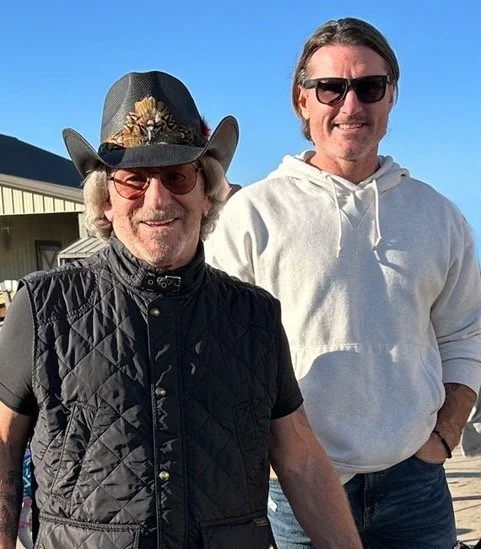
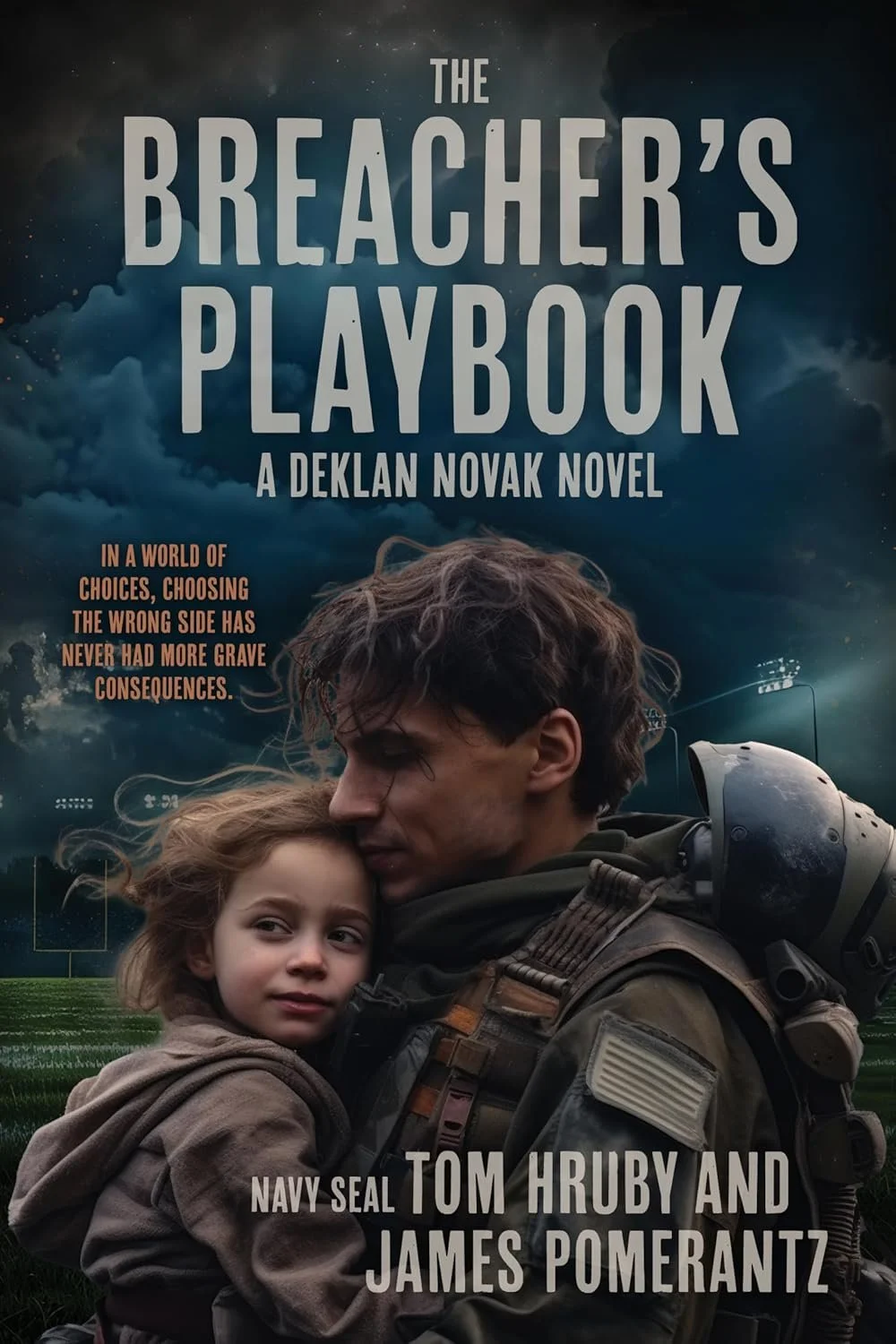
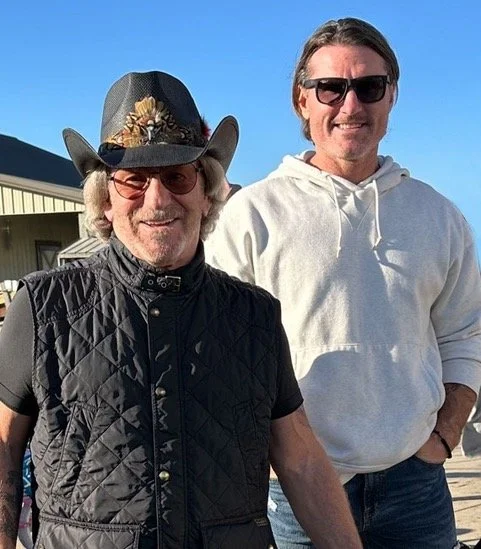
Q&A with Tom Hruby and James Pomerantz, The Breacher's Playbook

The Breacher’s Playbook asks a powerful question: What happens when the skills that kept you alive in war are no longer welcome in everyday life? What inspired you and Tom to explore that theme in such a personal and intense way?

JAMES: Transitioning from military life to civilian life is a struggle for so many veterans, especially those from Special Operations. When training for more than a decade appears to be for skills no longer needed, questions inevitably arise surrounding, what next? Tom and I talked extensively about how the book’s main character (retied SEAL Deklan Novak) struggling with his transition into civilian life would react if he suddenly found himself in a position to put those military skills to use again. What is someone capable of doing if unspeakable harm is done to a family member or friend? Is this the most revealing character examination that a man can be confronted with? 

TOM: The truth is that most of us spend a decade after service trying to recreate ourselves and transition into something acceptable by modern society. Most special forces guys are warriors at the core long before they attend BUD/s or the like.  Given years of training and experience we become masters of our craft – guaranteed only for the wars to end and the need for our skills on the battlefield to wane.  

Guys like me get bored if not effectively used and decide to move on.  Of course we are unprepared for how dissatisfying life in the regular world can feel.  We desire to make great impact, but the reality is that the skills of a legitimate warrior do not carry over easily.  

I consider myself a highly trained warrior fortunate to be able to just sit back and enjoy the regular world while it is still here. Personally, it has given me a great sense of peace about how my life experience is not wasted nor irrelevant.  For me, it would be impossible to tell my story without exploring this transitioning theme. The entire story is about the journey of a man finding peace, purpose, and balance between power and restraint in a bold new world.  It is a story of rediscovery, reconciliation, and redemption.  

Deklan Novak’s journey touches on grief, reinvention, and moral complexity. How much of his story is drawn from Tom’s real experiences—and how did the two of you choose which elements to fictionalize?

JAMES: Deklan’s journey is all drawn from Tom’s real-life experiences until Deklan is recruited by the FBI, joins their Quantico training facility,  and is sworn in as a Special Agent assigned to a Violent Crimes Against Children squad. The elements we chose to fictionalize, fall in line with Tom’s remarkable achievements. He is in his early forties and his life is far from complete. Deklan Novak became the fictional vehicle for imagining what’s next. Tom never believed the bar was ever set too high.

TOM:  Declan feels like me.  He thinks like me.  He is complex like me.  Deklan wrestles with ambiguity every step of the way.  And he knows it.  Or at least, he is increasing his awareness of life’s ambiguities.  At the same time, he is a damaged, traumatized man as we all are. He is dealing with his personal grief while confronting the grief of the outside world.  We get to watch Deklan bounce back and forth as he molds his new understanding of the world.  

The novel unfolds in nonlinear chapters over two decades. Why did you choose this structure, and how does it reflect Deklan’s internal transformation?

JAMES:  Nonlinear structures allow authors to immerse the reader right away in what the character is made of. Many times, as a reader, I am tempted to skip all the early biographical details in a novel to get to the meat of the story. A nonlinear structure eliminates the temptation to skip ahead.

TOM: I have always loved nonlinear story telling.  It provides an immediate richness to the story and characters that are unattainable with other formats.  It also allows great freedom in adding variation to the back story.  I feel that once you get it right it opens up vast opportunity to color the story in almost any way that you like.  I am also simply drawn to the fact that it is complex and difficult to do well.  This structure alone is artful.  

From combat missions to courtroom testimony to college football, the novel spans vastly different worlds. What was the biggest challenge in weaving those threads together?

JAMES:  By choosing a nonlinear structure and traveling from combat to the courtroom to the football field, the biggest challenge was what every author must confront which is preventing the reader from putting the book down. The subjects help. The interest level provided by combat experiences, playing Division-1 football and the intricate inequities in our legal system regarding abused children begin at the highest level. Our only goal from that point on was not to disappoint the readers with a predictable script. A great novel based on a true story feels real from page one.

TOM: There is so much story that was removed from the original manuscript.  We hope to tell those stories in subsequent books.  It was difficult deciding what we would remove from the original manuscript of over 600 pages.  I felt like the integrity of the characters and total story would suffer greatly as we cut story after story.   Fortunately, I think that James is rather a genius and the book is actually better cut nearly in half.  I am not quite sure how James did it. He somehow has the ability to see the whole story in his mind.  

Deklan is both a warrior and a witness—a character shaped by trauma, loyalty, and a deep moral code. How did the two of you approach writing a character who is both emotionally guarded and deeply empathetic?

JAMES: As a co-author but not the subject material, I only had to look inside Tom Hruby to find the morality inside of Deklan Novak. My father didn’t have to pat me on the back or reward me for acting the way I was supposed to act. I was expected to follow his lead. Tom didn’t have to explain to me what he was all about. I followed his lead.

TOM: Deklan is an enigma, even to himself.  He is discovering himself, piece by piece. As readers, we see this happen.  We get to see why he behaves a certain way before he even knows why.  We see why he is guarded emotionally and watch him confront his unconscious traumas in real time.  I think that is a fun part of the story, how readers can anticipate the way in which Deklan will confront his own thinking and decision making.  I think our structure is remarkable in how layered a character and environment we created.  

Kaley’s storyline is haunting and painfully real. Why did you decide to place Deklan in a position where he must navigate emotional and legal gray areas so far removed from combat?

JAMES: Again, this falls back on what is the purest form of character examination. Deklan, as a Navy SEAL, is paid to protect the nation and is the wall that our enemies must get over if they want to defeat the nation. An abused child is defenseless, much like the public in wartime. SEALs do not endure hell for a paycheck. SEALs endure hell for a lifetime of respect. That doesn’t end with retirement from the Navy.

Tom, as a Navy SEAL and former Division I athlete, and James, as a seasoned novelist how did your collaboration begin? What was the writing process like between such different life experiences?

JAMES: I met Tom at Northwestern football summer camp in 2014. I was working on another novel about an older college football player. Head Coach Pat Fitzgerald was a friend and allowed me to be a guest at training camp. There, Pat introduced me to Tom Hruby. Tom and I became friends but did not begin work on The Breacher’s Playbook until 2023. Writing with Tom is a breeze. He did all the hard stuff!

TOM:  We met at Northwestern Kenosha summer football camp in 2014.  We became friends discussing several projects over nearly ten years.  Our lives got in the way of this project until 2024.  I always knew that I wanted to work with James and when it turned out that we both were still interested and motivated it was easy.  Surface level James and I appear different but we are very much the same character.  We are both explorers, truthtellers, adventurers, teachers, and men of integrity.  When men like this come together, it is pretty easy.

The book pulls back the curtain on elite military training, college athletics, and child protection investigations. What kind of research went into making each of those worlds feel so vivid and true to life?

JAMES: Tom’s grueling experiences at BUD/s and as a D-1 football player came to life on the page quickly. I traveled to Quantico and the FBI Academy for an unprecedented access visit to a secure military base. The FBI Academy is on the Marine Base at Quantico, Virginia. Tom’s SEAL background opened doors that normally never opened at the FBI Academy. The lead instructor at the Academy was a former Navy SEAL and knew Tom. He gave us hours at the base to show us every step of training that an FBI agent endured throughout his time in the academy.

TOM: I have experienced them first hand.  We also had unprecedented access to experts and facilities.  

If the book were adapted for the screen, who would you want playing Deklan—and what tone would you want the adaptation to strike.

JAMES: Tom and I have discussed this question at length. I was leaning towards Tom Hardy as Deklan, but age and similar roles may creep into the boundaries. Timothy Chalamet is a great actor but would have to bulk up for the role. Chris Pine, Chris Pratt and Jake Gyllenhaal are all possible candidates, but a similar role tag may come into play. The tone of the movie must be thriller laced with the testosterone humor associated with SEAL teams, football teams and law enforcement. 

TOM: My sons think that I should play Deklan.  

The Breacher’s Playbook is the first in a planned trilogy. The book ends with Deklan joining the FBI. What can you tell us about where Deklan’s story goes next?

JAMES: Deklan grows frustrated with the legal handcuffs associated with a federal agency and law enforcement in general, where it seems like more rights are given to criminals than the victims. Deklan will explore outside opportunities to use his skill set more effectively through a privately funded police force made up of Special Operations veterans.

TOM: Deklan does not stay with the Feds for very long.  He grows increasingly disillusioned with the bureaucracy and impotency of government agencies.  Deklan is lured away from governmental institutions to something far more versatile, dynamic, funded, and functional.  

About The Playbook:

Deklan fought his demons in the combat zones of Iraq and Afghanistan as a Navy SEAL breacher and now in Chicago as a special agent for the FBI’s Violent Crimes Against Children squad.

That grit will be what he leans on in his new role as a tough FBI agent tasked with unraveling the disappearance of two children from a daycare center owned by his mother in this first installment.

This debut narrative, the first in a planned three-book series, is a fictional account based on Hruby’s real-life story.

The mystery thriller lays the groundwork for what the authors describe as a recurring character who is hard, fast, and mean as a razor wire. Deklan’s life path is one of determination and sacrifice in the face of defeat. That grit will be what he leans on in his new role as a tough FBI agent tasked with unraveling the disappearance of two children from a daycare center owned by his mother in this first installment.

Get your copy on Amazon | Bookshop.org

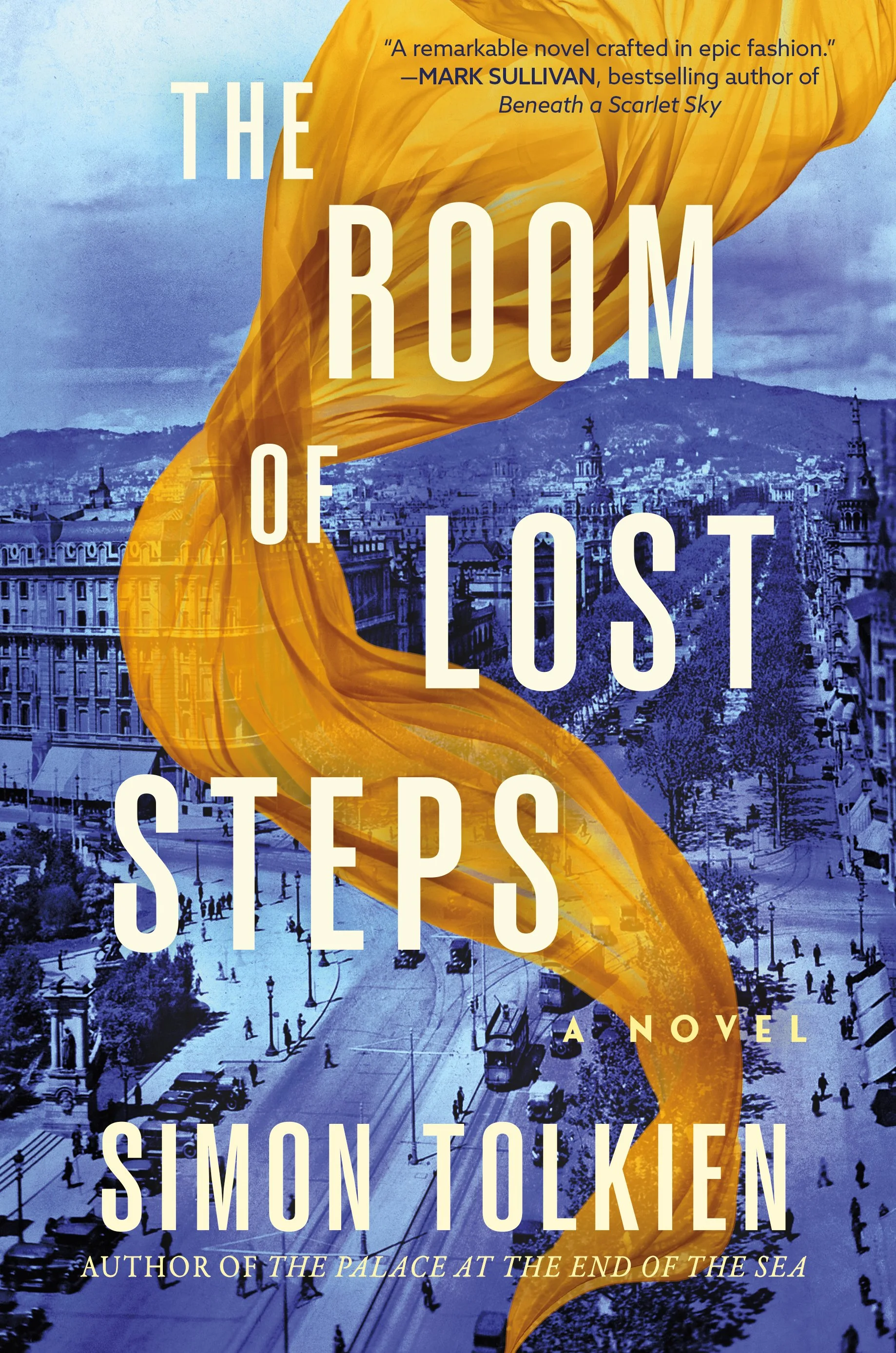
Q&A with Simon Tolkien, The Room Of Lost Steps

Why is your novel called The Room of Lost Steps?

Because I got lucky!

In the summer of 2019, I spent a week in Barcelona doing research. I had a series of sites to see, but changed my schedule on the last day because my tour guide happened to mention that Antoni Gaudí’s architectural masterpiece, the Güell Palace, had been used as a communist prison or cheka during the Civil War.

As I passed through the wrought iron entrance archway and entered the cavernous lamplit vestibule, I felt a sense that I had left the world behind and that the palace was magical, turned in on itself, alive and watchful, in a way I had never experienced in any building before. And as I walked through the beautiful halls with their thick walls clad in ebony and rosewood, iron and stone, I felt a dawning certainty that this was where the climax to my book would play out. As if my characters already existed there, their footsteps echoing on the marble stairs just like mine.

Finally, I came to a sumptuously decorated rectangular room with an elaborately coffered oak ceiling and snake-like ornaments, separated by three marble columns from a narrow gallery overlooking the street below. I looked in my guidebook and saw that this was the room of lost steps, so called because it was where supplicants waited to be admitted to the great hall beyond, walking up and down, thinking of what might lie ahead. Lost steps trod on the threshold of success or despair. But I knew that for my hero, Theo, this would be where his story would end; this would be the room where Esmond, his schoolfriend turned communist secret policeman, would interrogate high value anarchist prisoners brought up from the basement stables turned dungeons down below. Prisoners that would include the girl that Theo loved.

All the rest of that day, I took measurements and made notes, filled with a sense of gratitude and wonder. I felt as if the palace and the room of lost steps had been waiting for me, even though that of course made no sense, because I had stumbled on them by virtue of a chance remark. 

Back in America, the feeling stayed with me, and years later, when a friend read my book and suggested that The Room of Lost Steps should be its title, I knew immediately that she was right. Because it was the room where everything ended, and because of its mysterious name, and because it suggested the theme of loss and disillusionment that lies at the heart of Theo Sterling’s journey from boy to man.

What is the significance of the photograph on the cover of The Room of Lost Steps?

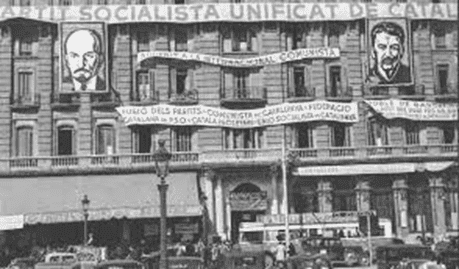
The photograph of Barcelona from the 1930s was taken, looking across Plaça de Catalunya to the Passeig de Gràcia. On the left, at the corner of the square, stands the imposing Hotel Colón, which was demolished in 1940 and replaced with a bank. The luxury hotel plays a vital part in my novel and the rapid changes that occurred there in 1936 -7 are central to the hero, Theo Sterling’s experience.

Theo visits Barcelona for the first time in the summer of 1936, and stays in the hotel with his mother and stepfather, looking down from the windows of his room at crowds of well-dressed people walking among the statues and fountains. But his excitement turns to horror when he sees the terrible carnage in the square following the fighting for control of the city between the army rebels and the anarchist workers on July 19th. 

In the evening, he witnesses the bravery of the Civil Guard commander who succeeds in negotiating a ceasefire, enabling the besieged soldiers holed up in the hotel to be evacuated; and afterward, he spends the happiest days of his life with Maria, the anarchist girl he loves, staying in the same room, now pockmarked with bullet holes.

They experience together the heady first days of the anarchist revolution in the city, walking up the Passeig de Gràcia to the Ritz Hotel which has been turned into a meal kitchen for the poor, who are eating off monogrammed plates under sparking chandeliers. For a moment, Theo believes that the meek have inherited the earth, until he is forced to flee Barcelona, hunted by anarchist enemies using their new power to settle old scores. 

He returns to the city the next year as an International Brigade soldier, only to find that the hotel has become the headquarters of his new master, the Communist party. A huge portrait of Stalin hangs down over the room where he was once so happy, and he has no answer to give when Maria tells him that “they take everything. Even you.”

Ninety years later, the Plaça de Catalunya is at the beating heart of the modern city of Barcelona, but many of those walking among the statues and fountains are unaware of the extraordinary events that once took place there, and which I have tried to bring to life in my novel. 

In the preface to the Room of Lost Steps, you wrote that the novel “is a fiction set withing real history,” What does that mean?

I have always believed that a historical fiction writer can add to history, but that he or she must not change it, because that would be to deceive the reader. But then, when I visited Barcelona to research this book, I realized that I had a unique opportunity to go further than addition, because the locations and timelines of the street fighting between the anarchists and the rebel soldiers on July 19, 1936 could provide a natural itinerary for my hero, Theo, to follow, thus enabling the reader to viscerally experience with him the principal events of the day through fiction wedded to history: a combination far more powerful than when the two just operate side by side.

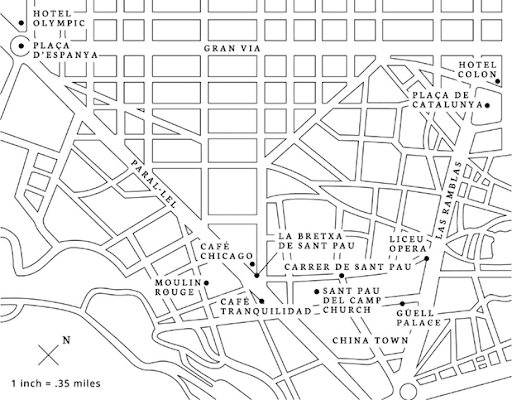
In the book, I provide this map (Barcelona, Events of July 19, 1936) to enable the reader to follow Theo’s itinerary, and I’ve attached a copy to illustrate how it works. He is awoken at dawn by gunfire outside the Olympic Hotel where he is staying – (see the top left of the map). Outside, in the Plaça D’Espanya, he witnesses the horror of army cannons being fired down a crowded street causing “a scene of carnage that nothing in his life up to that moment could have prepared him for … severed arms and legs and other nameless chunks and strips of flesh hanging in the leafy branches …” He flees down the Paral-lel boulevard to a huge barricade at the Café Chicago built by the anarchists to stop the soldiers linking with other military units to the south and east. There, he participates in the heroic resistance to the army’s attacks and sees how it ultimately fails when the soldiers use a human shield of women and children to advance; and then, hours later, he meets more anarchist fighters and assists in the retaking of the barricade, before he is sent on as a messenger to bring news of the victory to the charismatic anarchist commander, Buenaventura Durruti, in the Ramblas. This encounter affects Theo profoundly and convinces him that he is “touching history”: the same reaction that I am hoping my readers will experience.

Inspired by the Barcelona chapters, I took the same approach of welding fiction and history together, when writing the war chapters in Part 2 of the novel. A group of volunteers did arrive at the front on the night before the Battle of Jarama without any military training, and Theo becomes one of them. His role as a runner messenger allows the reader to see first-hand the insanity of the orders that led to the unnecessary deaths of hundreds of Americans the next day, and a mutiny and court martial did occur after the battle just as described in the book …

Thus, history in The Room of Lost Steps becomes not just a framework for fictional events, but fuses with the fiction in the events themselves, allowing readers to share the experience of the men and women who lived through those extraordinary times. Their story is often shocking and distressing, but as I say in the Preface, “that is how it was”, and sometimes “history can appear stranger than fiction.” 

What effect does the Spanish Civil War have on the hero of the novel, Theo Sterling?

Theo joins the International Brigades half way through the novel for a number of reasons. He fell in love with Spain and with the firebrand anarchist girl, Maria, during the summers he spent in an Andalusian village before the War, and he wants to return to fight to prove himself worthy of her, and because his highly developed sense of social justice makes it impossible for him to stand aside while the Spanish Fascists seek to overthrow the democratically elected government, so as to preserve their power and wealth and keep the poor from escaping a condition of semi-serfdom that has prevailed for centuries. Theo’s life experience up to this point has led him to believe that a man can ‘touch history’ and make a difference to the world, and he is determined to put this to the test. 

At home, Theo’s stepfather tries to dissuade him from volunteering by describing his experience of the horrors of trench warfare in the First World War. But Theo won’t listen. Love and anger and belief drive him forward, and the second part of the book tells the story of what happens to these emotions when they are tested in the furnace of mechanized war.

Theo’s ideals help him to make a perilous crossing of the Pyrenees at night and his assignment to the Lincoln Battalion makes him feel that he has rediscovered his American identity. But thereafter the process of disillusionment quickly begins. He receives no training whatsoever before the incompetent Communist Brigade leadership throw the battalion into a suicidal attack in which they suffer 66% casualties without getting anywhere near the Fascist line. And after the battle, the survivors are kept as virtual prisoners in the trenches, so that they won’t be able to tell their stories to the new recruits. 

Another battle follows, and Theo experiences the full terror of modern warfare. As he shelters from the ceaseless shelling, parched and starving, he comes to understand that his stepfather was right. Flesh is no match for bullets and bombs, and courage does not win battles. Might will defeat right because the Spanish Republicans cannot match the Fascists as long as they are supported by Nazi Germany and Mussolini’s Italy, and the western democracies refuse to intervene. One soldier and his rifle have no significance in such equations, and in the end, all that Theo has left as he stumbles in retreat across the desert landscape is the need to save his wounded friend. 

The Room of Lost Steps is a story of belief and disillusionment, of hope and loss, and what is left of a man when his ideals are stripped away.

Grab your copy of the book on Amazon | Bookshop.org

Q&A with F. F. Mormanni

You’ve written across several genres—sci-fi, thriller, drama, fantasy, and horror. What draws you to explore such a wide range of stories?

As a kid, I was a voracious reader, and loved fantasy and sci-fi novels—anything with immersive world-building. So naturally, when I started writing my own stories, I leaned toward high fantasy. As time went on, I was exposed to a wider range of stories, mostly through regularly watching all kinds of films, and realized that I was interested in pretty much any genre if the themes were strong and the characters were compelling. 

I enjoy the challenge of writing stories in different genres. I think I am better at writing sci-fi and thriller, simply due to having practiced them more, but I don’t want to limit myself. 

Double Crossed and Mind the Gap both have unique titles—can you tell us the story behind them? 

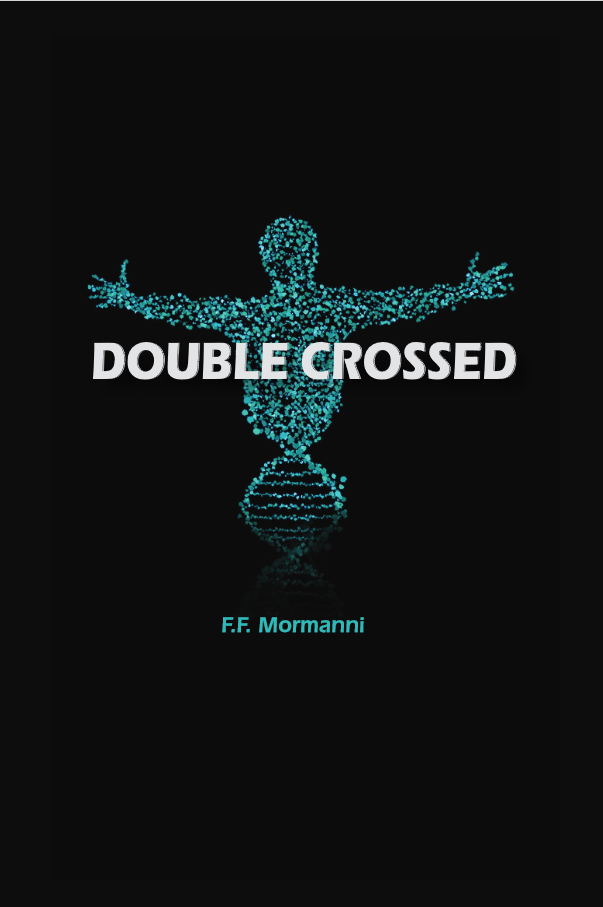
Double Crossed is a medical techno-thriller novel about CRISPR and memory transfer technology being used for nefarious purposes—specifically, an attempt to infiltrate the government by surreptitiously planting a human clone in the White House, and how this impacts both geopolitics and the president’s relationship with his childhood best friend. For most of the writing process, I used a stand-in title, as nothing really clicked for me until after I had finished the first draft. 

Several characters in the novel are cloned using this technology without their knowledge or consent. The “double” in the title refers to both the literal existence of these clones and the duplicity required to keep them hidden. It’s a play on the espionage term “double cross” because, the doubles/clones, by impersonating their originals, betray the very values those originals stood for and the country for which they work.

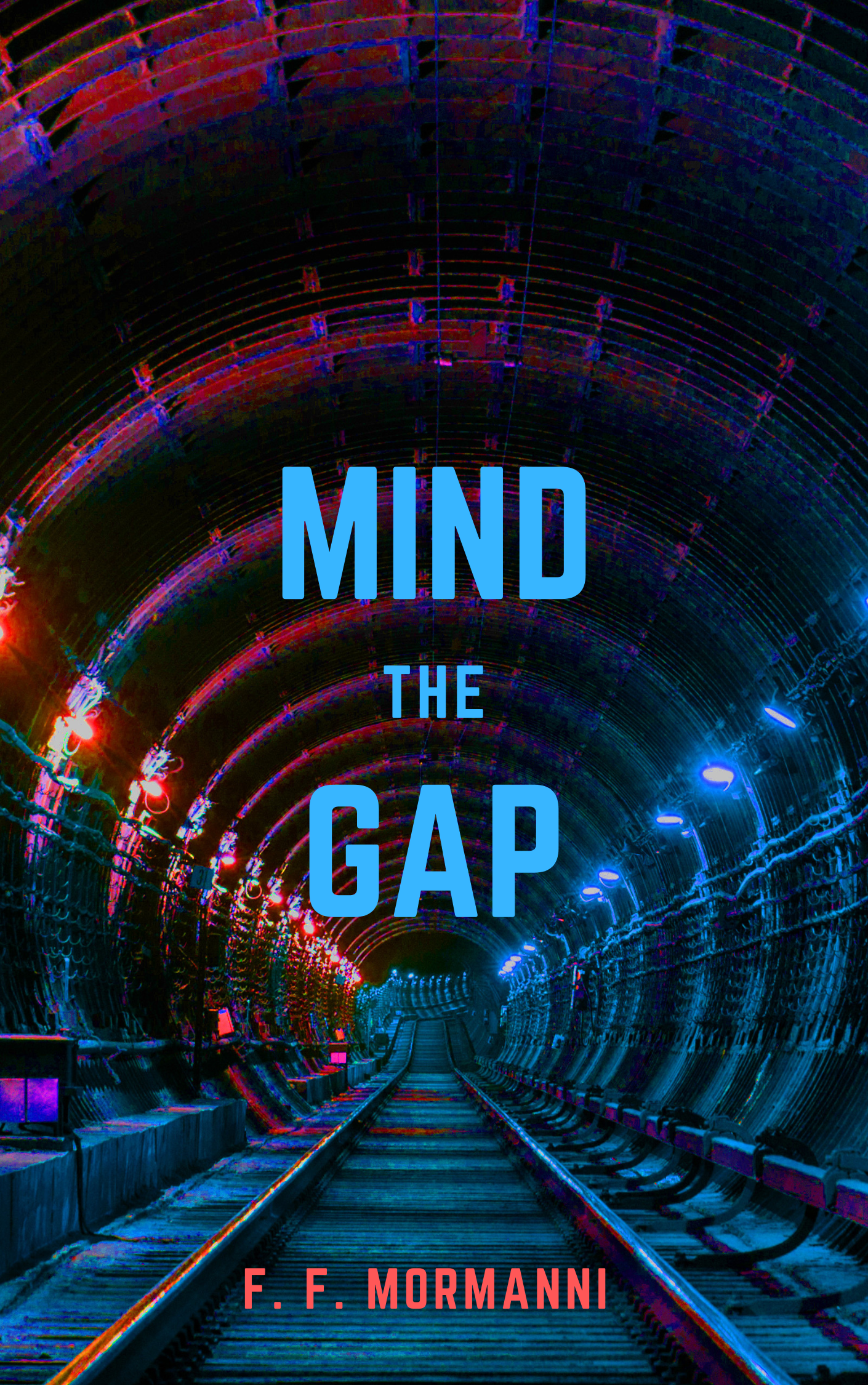
I came up with the title for Mind the Gap early on in the writing process, though I didn’t fully develop its layered meaning until I had finished editing and started working on the script adaptation. The story follows rebellious young adults in the daredevil photography community—people who run through working subway tunnels, and climb bridges and skyscrapers. In the physical sense, the title refers to the gap between a safe subway platform and the dangerous subway tunnels. Additionally, “mind the gap” is a recurring statement over the loudspeakers on the London Underground (though my novel takes place in New York City). 

The title also represents the psychological gap between abstraction and reality. Rocco, the protagonist, and most of his friends stand on the brink of dangerous decisions, such as succumbing to the allure of drugs, trespassing, hanging out with the wrong crowd, or putting themselves in life-threatening situations. However, one of the themes I explore in the novel is that, although it might be tempting to participate in these risky behaviors, we have the ability to choose otherwise. 

How does your background in screenwriting influence the way you write novels, and vice versa?

When I come up with a story I think would work for both mediums, I usually write the novel first and then adapt it into a script. I find it easier to fully develop the world, characters, and plot in prose before figuring out how to extract the essentials into a much leaner format. 

This year is actually the first time I’m doing this process in reverse. With Whispered, my espionage thriller, the plot came to me quickly, and because screenplays are shorter, I decided to write the script first. Now I’m working on the novel version, and although having the skeleton already fully built is helpful, fleshing it out with the depth a novel requires is a completely different ballgame. 

My screenwriting background shapes the way I write novels, as I tend to visualize scenes cinematically. At the same time, writing novels is a good reminder of the importance of a strong literary tone, even for scripts, which tend to have limited word counts. 

Which of your literary influences—Asimov, Herbert, Tolkien, Rand—has shaped your voice the most, and how?

Ayn Rand has influenced my writing and my life in general more than any other author. Her writing style is incredibly clear, but also has a distinct artistic flair and sense of life. I re-read her fiction every few years and always discover something new. By regularly reading her works, I’ve learned how to develop conflict between characters and how to explore a wide range of themes within complex stories.

You’ve adapted some of your novels into screenplays. What’s the biggest challenge in translating your work for film?

The biggest challenge is learning how to extract the essentials from a novel to fit the constraints of a screenplay, which is typically around 120 pages, or two hours of screen time. As much as I would love to adapt every scene, the process requires cutting and reshaping certain things so they are more natural for actors to portray and more efficient for the screen. Descriptions need to be tight, but vivid—just enough for directors, producers, and other collaborators to understand the original vision.

How has performing at prestigious venues like Carnegie Hall and Lincoln Center shaped your approach to storytelling in other mediums?

Drawing from the old saying, “practice, practice, practice” to get to Carnegie Hall, it really did take years of consistent work before I could perform regularly at venues like that. It shaped my approach to storytelling in the sense that I understand how long it takes to get good at anything. I’ve carried that mindset into every other medium in which I work. 

Being in the classical music world has also exposed me to a wide range of experiences, including high-pressure situations. I’ve included some of these moments in scenes or storylines in my writing. 

You wear many hats—novelist, musician, producer, actress, and model. How do you stay creatively grounded across so many disciplines?

Practicing one discipline always helps me improve in others. For example, playing piano improves my dexterity, which carries over to flute and harp, and vice versa. Acting deepens my understanding of character development and dialogue, which makes me a stronger writer. 

I keep a database of ideas across all mediums. Some stories are better suited for film, others for a novel or piece of music. Being involved in multiple forms allows me to choose the format that works best for any given idea. 

I don’t always have enough time to work on everything every day, but I carve out time each week to work on creative projects. It’s important to be intentional about continuing to grow in each area over time. 

Looking back, which creative achievement are you most proud of—and why?

I’m most proud of getting into Juilliard. It was a dream I had since I first started playing flute and harp. During the year of my auditions, I reached a new level of playing that felt like the equivalent of fluency in a language. I could fully express myself musically and had achieved the technical mastery I had been working toward for years. What made it even more meaningful was being able to maintain a high level of playing under immense pressure.

If you could collaborate with any one of your listed influences—living or not—who would it be and on what kind of project?

Michael Crichton. I’ve always admired how he built such an impressive career as a novelist, screenwriter, director, and producer, all after going to medical school. Like Crichton, I enjoy weaving real science and technology into my plots and exploring how today’s discoveries might influence future advancements. If I could collaborate with him, I would want to co-write a feature script and have him or Spielberg direct it.

Are there any upcoming novels that we should look out for? 

Yes, Whispered is my upcoming novel, which I hope to publish in the near future. It’s an espionage thriller about a disgraced CIA operative who investigates the seemingly senseless murder of his brother and subsequently uncovers a neo-Nazi plot to overthrow the German government.

What advice would you give to artists trying to navigate multiple creative paths at once?

I think it’s important to pursue multiple creative paths, even though conventional wisdom says to focus on just one. It’s true that mastery takes time, but exploring different disciplines can make you more well-rounded, which almost always benefits your work. It also helps you figure out what you truly love and keeps the day-to-day process interesting. 

Structure also matters. I recommend setting a schedule so that each creative path gets the time it deserves. It doesn’t have to be rigid, but consistency is key. 

Industry relationships also play a big role. In entertainment especially, being active in one area can open doors in another. For instance, acting on a set might lead to writing opportunities. Producing a project might connect you with collaborators for another. Each path can end up supporting the others. 

Book Information:

Double Crossed

After reading about unusual autopsy findings of a recently deceased senator, President Jeremy Lewis opens an investigation into what is soon revealed to be an apparent foiled attempt to infiltrate the administration at the highest level through the use of medical and technological capabilities far beyond what is known to exist. President Lewis then enlists his childhood best friend and tech-savvy entrepreneur, Ian Richards, to assist him in the endeavor.

This same death arouses the suspicions of Ross Blanchard, a relentless reporter for The New York Times, who avails himself of equally sophisticated technology in his own investigation. The intelligence community and Blanchard ultimately cooperate, culminating in a daring raid on a clandestine laboratory in the most unlikely of locations. But is this really the end of it?

Buy on Amazon

Mind the Gap

After the sudden loss of his father, Rocco Amiri, a misguided, rebellious young adult, begins spending his nights running through working New York City subway tunnels, climbing bridges, and exploring rooftops with his friends.

As he tries to uncover information about his late father and struggles to make ends meet in the city that never sleeps, Rocco slowly establishes a presence in the “outlaw Instagrammer” community with his best friend, Thalia. However, Rocco must soon decide whether indulging his passion for photography and satisfying his curiosity about his father are worth the risk.

Mind the Gap unmasks the clandestine New York City urban community and tells the story of the fine line between safety and danger—one easily crossed by those who seek dangerous thrills.

Buy on Amazon