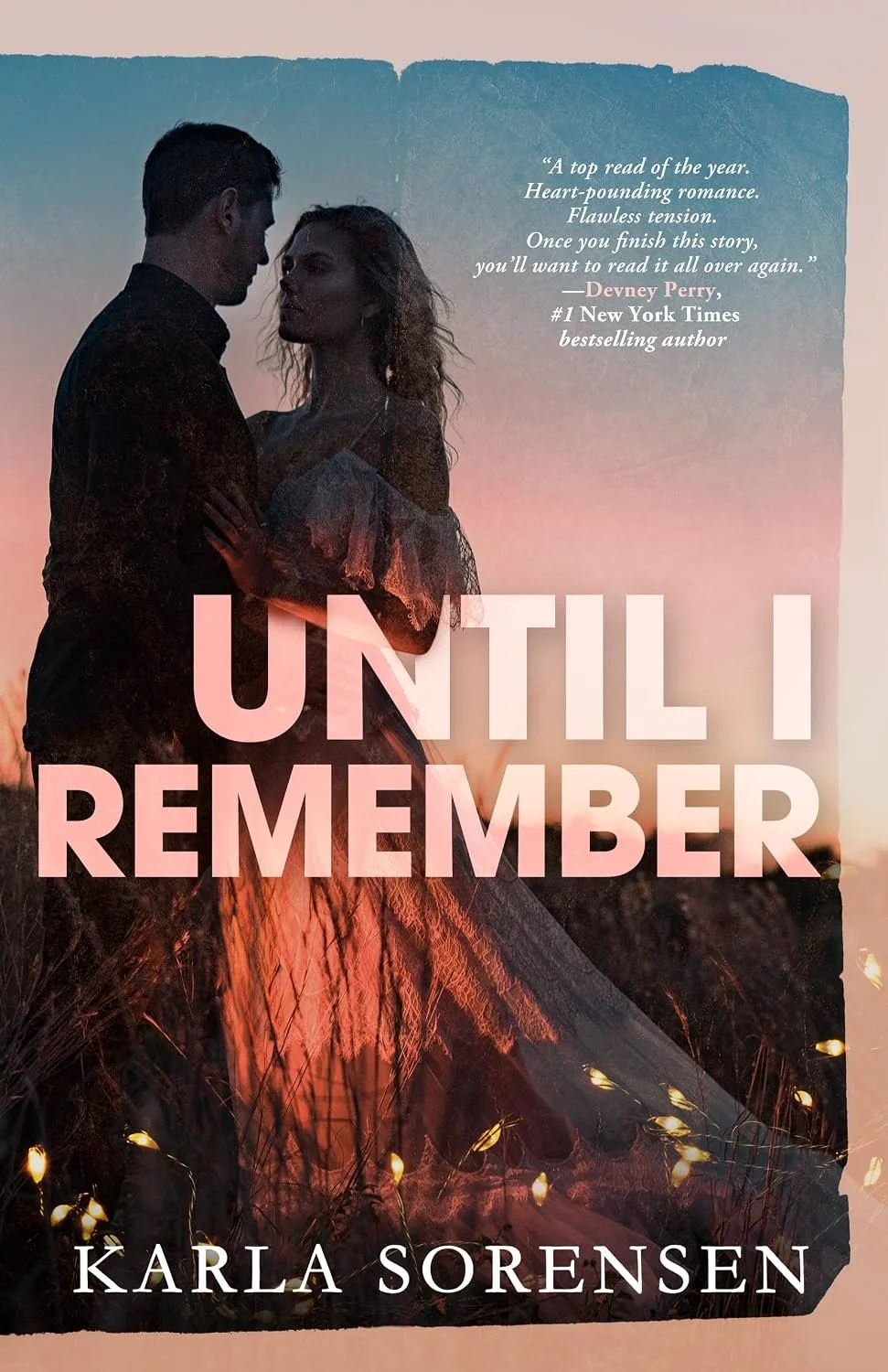
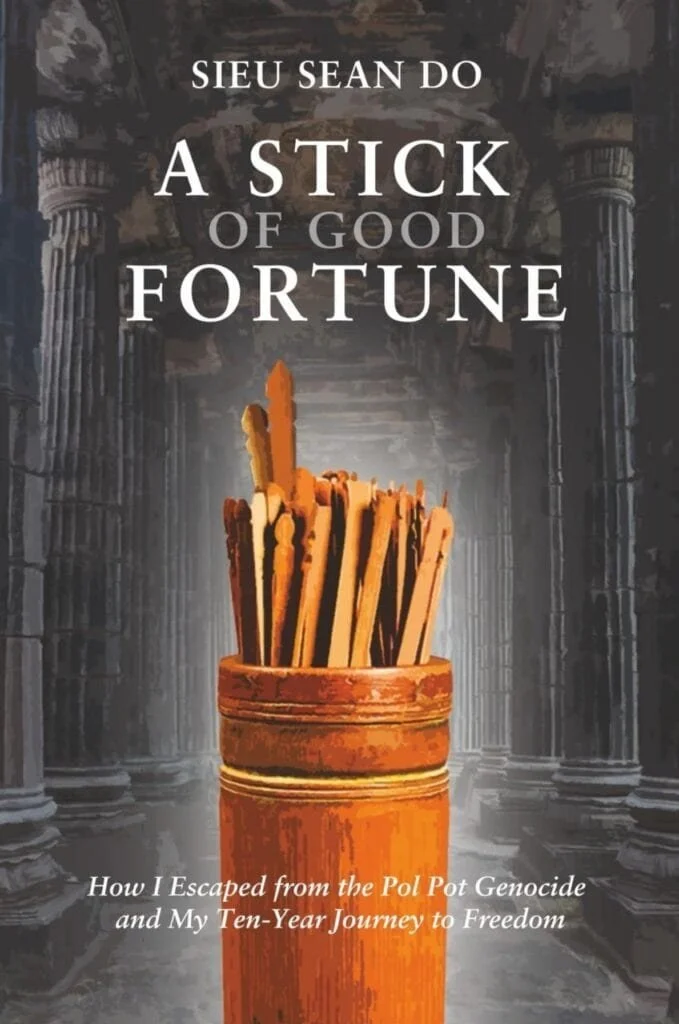
Spotlight: A Stick of Good Fortune by Sieu Sean Do
/
Genre: Memoir/Autobiography
A Stick of Good Fortune:A Stick of Good Fortune: How I Escaped the Pol Pot Genocide and My Ten-Year Journey to Freedom is a gripping memoir of survival, faith, and the unbreakable human spirit.
Sieu Sean Do was born into a loving family in Cambodia. His childhood was violently shattered when the Khmer Rouge seized power in 1975. Millions were driven from their homes, separated from loved ones, and forced into a brutal world of starvation, hard labor, and terror. Under a regime determined to erase identity, family, memory, and hope, he endured repeated brushes with death in a landscape where survival itself seemed impossible.
Yet in the depths of devastation, small signs of destiny appeared to guide him — a thread of fate, a whisper of unseen protection. A prognostication from a humble “fortune stick,” rooted in Cambodian spiritual tradition, became a recurring symbol of faith and an unseen force that appeared to shield him through unimaginable danger.
But escape from the killing fields was not the end of his trial. Over the next decade, his journey carried him through multiple refugee camps along the Thai–Cambodian border, where survival demanded courage, perseverance, and at times, just plain luck. Amid disease, violence, and grief, he emerges as a healer — serving as a translator for international medical teams and assisting fellow refugees in their most desperate hours. Through acts of service, he reclaims a measure of dignity and a renewed sense of purpose.
This personal account spans the years 1975 to 1985, a decade marked by loss, confinement, struggle, and moments of hard-won triumph in the pursuit of freedom. While his first memoir, A Cloak of Good Fortune, chronicled his early survival under the brutal Khmer Rouge regime, this volume continues the journey, tracing the long and uncertain road from exile toward liberation.
A Stick of Good Fortune bears witness to one of the twentieth century’s darkest chapters while affirming the enduring power of compassion, resilience, and hope in the aftermath of unspeakable physical and psychological trauma. This book stands in honor of those who perished in war, those who rebuilt their lives, and those whose voices were silenced before their stories could be told.
Excerpt
An excerpt from A Stick of Good Fortune: How I Escaped From the Pol Pot Genocide and MyTen-Year Journey to Freedom by Sieu Sean Do, published 2026 by Hibiscus Press. Reprinted with permission.
Life in the border war zone was dangerous for everyone—refugees and aid workers alike. For their own safety, the foreign medical staff crossed back into Thailand every evening, returning only after sunrise. We lived in constant fear. Before nightfall, everyone hurried to finish dinner. Candles were extinguished, the shelter fell silent, and women and young girls hid beneath mosquito nets and blankets.
I did not understand why until the refugee sleeping beside me whispered, “A military commander named Thhi guards the hospital at night. The Red Cross gives him food supplies, but after dark he sneaks into the shelter to rob people and rape women. No one dares report him. He has an accomplice who tells him everything. You can’t trust anyone here.”
A chill ran through me. Pretending to use the latrine, I slipped outside and moved the two pieces of gold leaf Mama had sewn into my secret pocket into the hidden flap inside my jeans near the zipper.
The night was so quiet I could hear my own heartbeat. Returning in the darkness, I accidentally stepped on a small mirror, shattering it.
“Oh, heaven and earth!” someone cried. “Breaking a mirror brings terrible luck!”
*****
The next day, as I walked toward the latrine, a woman in her early thirties rushed toward me. Terror filled her eyes. She grabbed my hand, fell to her knees, and whispered, “Young brother, please tell the Red Cross—but no one else. Thhi is raping me every night.” Before I could respond, she disappeared.
I stood frozen. Her fear haunted me. If I spoke, would I make things worse? If I stayed silent, would I become complicit?
The following morning, when Mr. Meinrad Studer finished his daily headcount, I quietly followed him and repeated the woman’s words in a whisper.
His face hardened. “I will investigate,” he replied before walking toward the hospital.
I returned to the shelter uneasy. Even Uncle Luk avoided me. By the end of my first week, I could not shake the feeling that unseen eyes were watching me.
*****
Several nights later, heavy footsteps echoed through the shelter.
Thhi had returned.
We heard the familiar sound of his bottle, then the muffled cries of the same woman as he assaulted her once again. Her child’s sobbing echoed through the darkness. When he finished, his footsteps approached.
“The guy who speaks English and French!” he bellowed. “Get down here!”
My body went numb. I climbed down the bamboo ladder as he shined a flashlight into my face. He pressed the barrel of his rifle against my forehead.
“You bastard,” he growled. “You’re the one who snitched on the white people.”
He shouted for Uncle Luk to come down. “Give me your gold!”
Before Uncle Luk could answer, Thhi slapped him across the face. Trembling, Uncle Luk handed over a small bundle. “This is all I have.”
Thhi snatched it away, then turned to me. Without warning, he kicked me hard in the chest, sending me crashing into the bamboo wall. As I struggled to stand, another kick slammed into my stomach. He grabbed my collar and hurled me into a bamboo post, knocking pots and pans to the floor. The shelter erupted with the deafening sound of metal clattering. He seized my throat and jammed his gun against my head. “Where is your gold?” He cocked the weapon. “I’m going to kill you.”
The butt of his pistol smashed into the back of my head. I collapsed, dazed, against a mosquito net. Blood streamed down my face. My left ear rang so loudly I could barely hear him.
Was this the “major, intolerable burden” the fortune stick had foretold? Not landmines. Not starvation. But this—the wrath of a warlord for doing what was right.
Thhi dragged me outside toward a small shed beside the hospital. “Take off your clothes!” He searched every pocket but found nothing. “If you’re hiding anything,” he snarled, “I’ll kill you.”
Blood blurred my vision. Desperate, I remembered the worn twenty-dollar bill Mama had hidden for me. Somehow, he had missed it during the first search. “This is all I have.” He snatched it away. “I knew you were hiding something. You don’t need American money here.” Then he leaned close. “If anyone reports me again, they’ll die right here.”
He turned to leave, then stopped and pointed a finger at my face. “Don’t ever tell those white people what I did.”
I collapsed onto a bamboo bed. For nearly two weeks I had struggled to survive after fleeing Vietnam, but nothing had shaken me like this. It wasn’t the beating. It wasn’t even the threat of death. The worst part was feeling my faith in humanity slipping away. Is this what I had risked everything for? For a long moment I wondered whether I could continue. No. It cannot end like this. I must stay alive.
*****
When I opened my eyes again, I was lying in the hospital. Around me wounded soldiers groaned beneath blood-soaked bandages. The smell of sweat, blood, and antiseptic filled the room. I reached for my head. It was wrapped in thick layers of gauze. A Khmer nurse approached with a sympathetic smile. “You were unconscious for a couple of hours,” she said. “You’re lucky. Your skull wasn’t fractured. I stitched the back of your head, but we need this bed for other wounded soldiers.” I could hear the sadness in her voice.
Still dizzy, I slowly made my way back to the shelter beneath the pale moonlight. Every step reminded me that I was somehow still alive. Climbing the bamboo ladder, I collapsed onto my mat.
The next morning, I awoke with a pounding headache and nausea. I grabbed my Red Cross plastic bag and vomited into it. Only then did I notice Uncle Luk sitting beside me.
“Next time,” he whispered gently, “just give him everything you have so he won’t hurt you again.”
A few courageous neighbors came to help. Chau Kin washed the dried blood from my bandages while his wife, Tu Kim Ly, brought me warm porridge. Many others kept their distance, afraid that even speaking to me might bring Thhi’s wrath upon them.
As I lay there recovering, I replayed everything that had happened. Then I remembered a young stranger who had been watching me closely several days earlier during lunch—a man with restless eyes and a suspicious smile. Could he have been Thhi’s accomplice? I never saw him again. But I never forgot him. Nor did I forget Thhi. Deep inside me, a quiet resolve began to grow. The thoughts of revenge never left me. I could not help wondering what I would do if I ever had the chance to fight back.
Buy on Amazon | Bookshop.org
About the Author
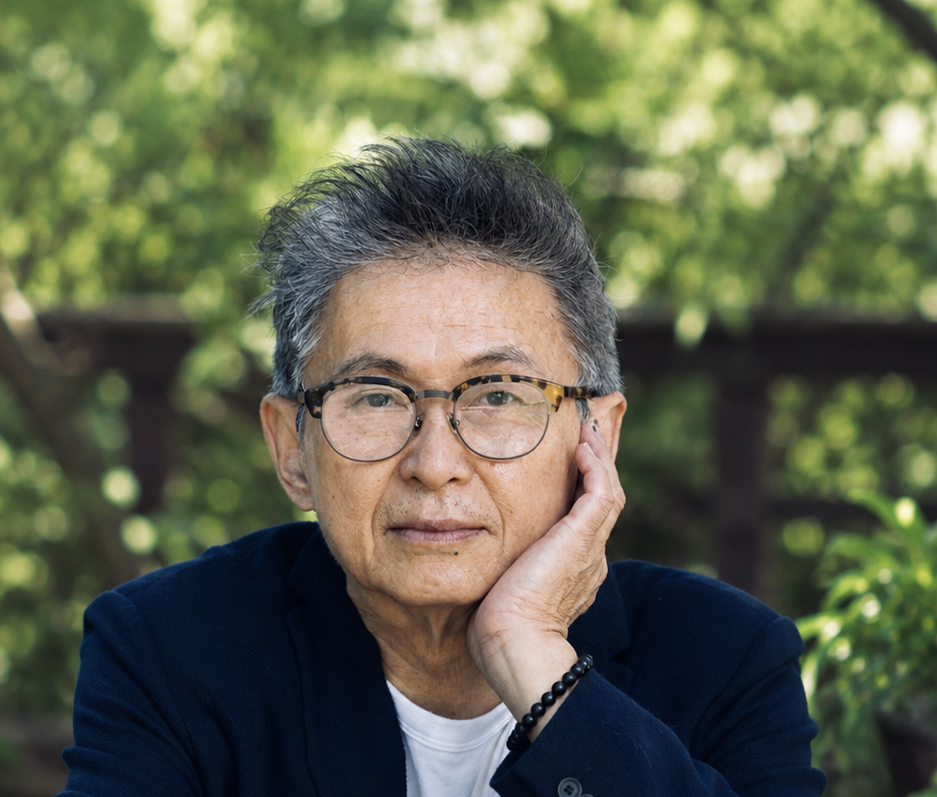
Sieu Sean Do (Do rhymes with go) was born into a loving family in Cambodia. Do was twelve years old when the KhmerRouge seized power. He survived the Cambodian genocide before embarking on a perilous journey to freedom. After escaping to Vietnam, he left his family behind at the age of eighteen and began a dangerous journey to the refugee camps along the Thai-Cambodian border. There, he served as an interpreter, trained as a medic, and worked alongside international doctors, nurses, volunteers, and humanitarian organizations to care for fellow refugees.
From the Cambodian Killing Fields to five refugee camps along the Thai-Cambodian border, A Stick of Good Fortune spans the years 1975 to 1985—a decade marked by unimaginable loss, displacement, hardship, and perseverance, as well as moments of hope and triumph in the pursuit of freedom.
After immigrating to the United States, Do devoted his career to public service. He worked as a medical interpreter at San Francisco General Hospital before serving for more than two decades as a Victim Witness Investigator with a Northern California law enforcement agency, advocating for victims of crime and supporting vulnerable members of the community.
Sean Do holds a Master of Arts in Humanities and lives in California.