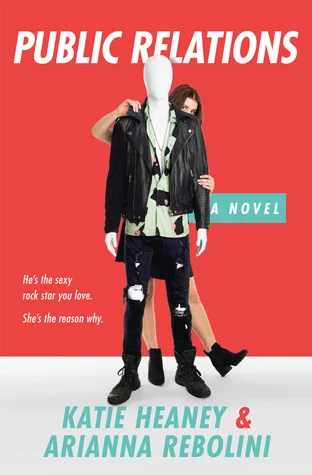
Review: Public Relations by Katie Heaney & Arianna Rebolini

I had really high hopes for this one, and I regret that I didn’t love it. I was immediately sold when I read the description and started the book with a smile on my face. However, I was left feeling disappointed.

It failed at what it attempted to accomplish. The set up was there, but it felt like the authors wanted to get the characters together and rush to the happy ending, so the fillings were neglected. It really lacked romantic development. I wanted these characters to be together, and this is only because I thought that they would be cute together.

However, with the material that was given I do not think that they were ready to jump in a relationship just yet. There needed to be more bonding. They barely spent any time together. And if they were together the interaction was not enough to have them be thrusted in a relationship so quickly.

I think if this was a duology this story would have made more sense. This is a good set up novel, and a second one could help with building the storyline and expanding upon the romance.

Another complaint I have is that there was a lot of information given at once. For example, the authors spent almost five pages explaining in detail why Rose ended up where she did. Quite frankly that part was boring, and I wish that it would have been condensed. It was too many details at once.

One thing that I did enjoy is the public relations aspect. It was interesting to see how that job worked and exactly what they did.

Characters

The characters are likable. Rose is funny. Archie is sweet. And I wonder if he was based off of Harry Styles because there were more than a few similarities between the two.

I do wish that there would have been more background on both of them. For example, Rose’s parents were mentioned a couple times, but I never got a sense of her relationship with them and their current role in her life. The same with Archie.

I really do think that this romance does have potential, and I would love to see them in a well-developed relationship.

Final Analysis

Public Relations has potential, but fails to develop anything in a way that would feel complete. It felt very rushed, and at times packed with unnecessary details.

Review: Ilsa by Madeleine L’Engle

Ilsa: The Passions and Complications of Human Nature

Madeleine L’Engle’s recently re-published novel Ilsa follows Henry Porcher’s obsession with Ilsa Brandes. Since he first gets acquainted with her, Henry is irresistibly drawn to Ilsa like a moth to a burning flame. He cannot live in peace without seeing her or at least following the events of her life at a distance. As children, Ilsa and Henry play together, but since Ilsa is three years older than Henry, she treats him somewhat like a younger brother or friend in whom she confides.

Henry himself comes from an old-fashioned southern family with a complicated past. His mother had a sister, Henry’s Aunt Elizabeth. Elizabeth fell in love with Ilsa’s father, Dr. Brandes, who was then just finishing his doctorate. As soon as Henry’s mother Cecilia and her sister-in-law Violetta found out about this romance, they forbid them to get married, arguing that Dr. Brandes was too poor to marry Elizabeth. Eventually, they forced her to marry Cecilia’s cousin. In the meantime, Elizabeth continued seeing Dr. Brandes and eventually became pregnant. When Cecilia, Violetta, and Elizabeth’s husband discovered this, they forbid her to see him and tortured her until she was at her wit’s end.

As opposed to all of them, however, Elizabeth was actually a humble, strong, and truly kind person. In the end, she was confined to the insane asylum after a miserable attempt to bring on a miscarriage. She soon died in childbirth. After Elizabeth’s death, Henry’s mother despised Dr. Brandes. In the meantime, Dr. Brandes got married and had Ilsa who lived alone with her father after her mother’s death. By now, he had become a famous naturalist. Ilsa’s and Henry’s story, however, begins many years after these events have passed. Consequently, their story is intricately intertwined with Elizabeth’s and Dr. Brandes’ romance.

It is into this complicated web of relationships that Henry is gradually initiated. Early on in the book, a fire destroys the Porchers’ Southern-style home. In the fray, Henry’s parents lose sight of their children. Dr. Brandes and Ilsa save Henry and his sister and shelter them in their home. When they finally bring them back, Cecilia and her husband are astounded because the people they most despise have rescued their children. Cecilia even goes so far as to say, “If I had known what was going on, those children would never have crossed the river with that man. Rather would I have seen them being carried down the stairs in their coffins” (37). For Cecila, her children’s survival seems to be far less valuable than her own high-flown principles. Cecilia’s cold-blooded reaction cannot fail to both shock and disgust us. Instinctively, we may wonder whether she has any human values at all. It is horrifying for a mother to even hint at the death of her children. And yet, unperturbed by any guilt whatsoever, she adamantly clings to her principles.

The book as a whole thus offers a very interesting commentary on the relationship between parents and children. It seems to prompt the question: What should be more precious to us — human values or our own principles imposed by family traditions and old hurts? Henry is both the product of an ancient family who is fixated on principles and an adolescent who dreams about being with someone who is so completely different from him and his family. He is thus attracted by everything Ilsa stands for — freedom, independence, and open-mindedness. Early on in the novel, after his father cruelly punishes him for asking a question about Ilsa and her family, the boy begins longing for the kind of people he just saw, “for Ilsa’s authoritative voice, and Dr. Brandes’ quiet one, and Ira’s cross one” (43). Henry is thus completely lost. He does not get any real guidance from his parents. Henry’s father only punishes him but neglects him otherwise, while his mother ignores him altogether. So, Henry is left entirely to himself.

In a way, it is only natural that he will turn to someone for support and guidance. Ilsa becomes his beacon. Over the years, he becomes more and more obsessed with her. Everything he does in his life revolves around her. The irony of the matter is, however, that she does not care about him enough. She treats him like a friend. And when the time comes for her to get married soon after her father’s death, she marries Monty Woolf, Henry’s cousin.

As for Henry, he simply mopes his life away. He goes to Paris to become a musician just because his father insists on it. He is gone for eight years. To his complete and utter disappointment, Ilsa does not even write to him once. She tells him, “I never write letters, so don’t expect to hear from me” (123). In response, Henry thinks to himself, “— Did she ever, did she ever wonder — I thought — Did she ever think once during those years: where is Henry, what is Henry Porcher doing now, Henry Randolph Porcher?” (123). Interestingly, she does not even think about what Henry is doing with his life or how he has changed. By this time, we may think that Henry could get the cue that she will never be as interested in him as he is in her. At this point, we may also think that it is time for him to free himself from his obsession. And yet, he just keeps dreaming about her, suffering that he cannot be with her, and dreaming some more.

As for his own accomplishments in life, we get the impression that he does not care too much about them. In Paris, he studies the violin for eight years only because that is what his father wants. Strangely, however, he himself does not seem to care. At one point, when discussing Henry’s Paris experience with him, Ilsa asks, “What else have you failed at, Henry?” His response is “Everything” (136). Afterwards, Henry himself asks her in despair, “What am I to do?” (136). At this point, Ilsa has a daughter, and, while she may not be happy with Monty, she at least has a stable situation in life. In contrast, Henry is always lost. He does not know what to do with his life. He knows that he cannot have Ilsa. Yet, he does not do anything to make himself happy. He is stuck in a vicious cycle and cannot move on.

When reading the novel, I kept thinking about the kinds of characters that Henry resembles. Eventually, I realized that the character he most resembles is Pip from Dickens’ Great Expectations. Pip loves the unattainable Estella and suffers miserably because he cannot be with her. Otherwise, however, he lets his benefactor decide his future for him and make him into a gentleman. Similarly, Henry lets his father and later his sister decide his life for him. His father sends him to Paris, but he does not become anyone. He fails. In contrast, whether he is miserable or not, Pip at least becomes a gentleman and has the chance to talk to his benefactor, Magwitch, before his death. Henry, on the other hand, becomes nobody. He just dreams about Ilsa and watches her life.

At one point in the novel, a stock company visits and Henry takes Ilsa to see Hamlet. Eventually, she falls in love with the main actor. After her husband dies, she begins dating him. As I was reading this part of the book, I realized that, whatever her situation in life, Ilsa at least does not despair. She knows how to survive. As Henry acknowledges close to the end of the book, “And I thought that no matter what happened she always would be all right. That had always been the most Ilsa thing about her” (329).

I cannot but agree with Henry’s conclusion, because, whether she is tortured by her husband or mourning her father’s death, she has the cool and at the same time passionate attitude to life that keeps her afloat, so to speak. Henry, on the other hand, is weak. He needs the image of Ilsa in his heart to stay alive. No matter how much of a good-for-nothing he himself may be, she sort of provides him with the raison d’être that he needs to keep going. In his suffering, Henry privately exclaims, “I wanted to write, to pour everything out of my soul in a wild impassioned torrent of poetry, in the ecstatic ravings of a novel” (254). But again, he does not even do that. It even frustrated me after a while that throughout the whole novel Henry did not  lift a finger to do something about his life, do his best to forget Ilsa.

Until the very end of the book, Henry just mopes and stays by Ilsa’s side. In the end, however, after his sister keeps pushing him to leave and forget about Ilsa, he finally walks out of her life. As the novel closes, he is in his mid-twenties. Although he does leave in the end, I cannot help but think that he had completely wasted his life.

The book as a whole is an insightful study of human nature, but in terms of character development, it somehow fails to leave a lasting truly positive impression. In the end, as far as Henry himself is concerned, his development as a character does not impress at all. He fails at everything in life and until the very end remains the inert sufferer. Ultimately, the book offers interesting and profound commentaries of human nature and, as such, it is definitely a valuable read.
 

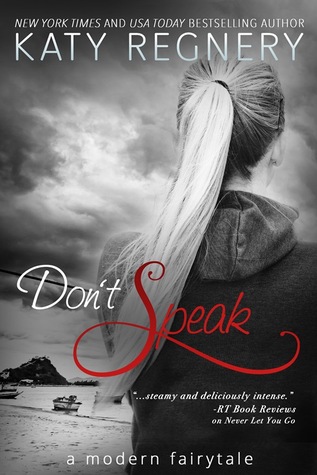
Review: Don’t Speak by Katy Regnery

Buy on Amazon

Buy on Amazon

This story is loosely based on the classic tale, The Little Mermaid. Some characters have the same names as characters from the tale, and also the author does attempt to show that the two main characters are from two different worlds.  It’s a modern day fairytale; and if I’m being honest, you really have to squint to see that it is a retelling of The Little Mermaid because other than names, it is very different from the tale. And if you skipped the synopsis that stated that it was a retelling, it would be hard to infer as you read the book.

It is an average story about a rich boy and a poor girl falling in love. Erik is the son of the North Carolina governor. Laire is the daughter of a fisherman and they live on a tiny island. She has two older sisters, and her mom died years ago. She cares for her dad because he’s had some health issues in the past and is sort of a fashion designer for her tiny island community.

Laire has big dreams. She wants to leave the island and go to college in New York. However, she is held back by her family. One day while helping her dad’s business she meets Erik. And the two begin a secret relationship. Eventually, something tears them apart for six years. But they do end up together in the end.

This is an extremely frustrating story. The plot is a little weak and lacks important development. The pacing is all wrong. It’s too fast. Loose ends are not resolved at the end and most of the drama was pointless.

However, those are not the source of my frustration. All of the characters were frustrating and varied on the scale of unlikability. I get the idea that characters need to be flawed; however, they also need to have some redeeming qualities. And if you plan to have them do unethical things, I’m going to need them to address that later on and understand that, that action might have been wrong. That shows character development.

Characters

Laire was incredibly naïve. I really had to suspend my disbelief for this character because of her upbringing. She was sheltered and lived on a tiny island. I think it was mentioned that three people graduated in her senior class. She is completely removed from the outside world. She does not have a cellphone or social media. Also, she doesn’t have any friends.

The book is told in third person, and I think that 1st person would have been more suited for it. Again, Laire is naïve, and it would have beneficial to see her internal thoughts. Maybe I would have understood her more.

I didn’t feel the chemistry between her and Erik. It felt very instalove, and I couldn’t really tell what they saw in each other. It was mentioned several times that they were physically attracted to each other, but I never got that emotional connection that I felt needed to be present. The book lacked any significant talk between the two that made me believe that they truly belonged with each other.

Besides her relationship with Erik, her relationship with her family was a major aspect of the book. She does go behind their backs because they would judge her for actions. Her family was very traditional in the sense that they believed that if you kiss a person, you have to marry that person. Their beliefs caused many conflicts and the created the idea that Laire had to be secretive.

The sister relationship was nonexistent. Both sisters turned their back on Laire without a second thought. They never stood up for her, and it could be determined that their loyalty to their dad blinded them.

One sister sort of helps Laire hide one of her many secrets from their dad. However, when their Dad finds out and Laire mentions her involvement in the situation, the sister completely flips out on Laire. As a whole, the problems that her and her family had were not resolved in the end.

Erik is supposed to be the “prince” but that can be debated.  Erik grew more frustrating as the book went on. He’s somewhat decent when the book starts. He’s a little too persistent in the beginning when he tries to get Laire to go on a date with him. It’s annoying. But you could somewhat root for him in the beginning. By the middle of book, I began to grow frustrated with him.

He was hypocritical. For example, he got mad at Laire for hiding their relationship from her family, but literally in the next chapter, we find out that he is doing the same. Later, he tells Laire a lie because he doesn’t want to tell her that he has a female friend. Of course, this causes unnecessary drama, miscommunication, and more unnecessary plot points that would not be resolved until the end of the book.

One of my biggest issues with him is that in the second half of the book, after him and Laire are separated, he makes unethical choices that rubbed me the wrong way. He’s now successful in his career and has the authority to hire individuals for his company.

There’s a scene where him and his sister, Hillary (executive assistant), are looking at résumés. Erik throws three résumés in the trash and hands Hillary the other two. Hillary comments that the three contenders are more qualified than the ones that he handed her. The readers get a glimpse of Erik’s internal monologue, and he thinks “The other three are women” and to Hillary he says that he likes the contenders that he handed Hillary better. It is very clear that this has happened before because he already knew Hillary’s response and states that they have had this conversation before.

Hillary is the only female that works at this company because he refuses to hire women because he got his heart broken years ago. And according to him, Hillary is “rare among women, and therefore the only woman he allowed to get close to him in any way, shape, or form.”

This issue is never brought up in the book again; we don’t see Erik learn from this or attempt to explain himself more. This was frustrating because I’m supposed to root for him, but he’s being a little sexist and making choices that are off-putting. It felt like a quality that a villain would have, not a prince.

Final Analysis

Don’t Speak is advertised as a modern tale of the Little Mermaid, but the book fails to prove that. It’s crowded with unlikable characters and unnecessary drama that lacks any significant development. It’s predictable and grows frustrating as it continues.

Review: The Official Chase 'N Yur Face Cookbook: Tasty Recipes & Fun Facts To Start Your Food Adventure by Chase Bailey

Let me first say how incredibly proud I am of this young man. First of all, I love cookbooks. When I first came across this book, I was like who is this charming kid radiating sunshine off the cover? Then as I started to read his background story and saw that he had autism, I was so blown by how far he has come and what a great role model and person he is for young people today. As a kid having food sensitivities and challenges, it was so inspiring how he overcame them through his exploration of food. What great support he has with his family, especially his mother, to have encouraged and helped him find his true calling and passion in life, cooking.

I didn't know anything about him prior to his book. I checked out his You Tube channel and was very impressed with his culinary skills and influences that mold his expertise. For a teenager to have such an impressive skill set in the kitchen was very amazing. As you check out the book, his infectious personality permeates through the pages. You can definitely tell how much he loves cooking through his stories and his approach to his recipes. The books splattered colorful, vibrant images to accompany the recipes, along with fun facts that shared some really awesome information. 

You get a real sense of his culinary influences that include his family, famous chefs and explorations through food that showcase his diverse, creativity in his recipes. You can really see how passionate he is about cooking and some of those recipes sounds so good you can eat them off the page. This would be such a great additional to add your cookbook library and be such a fun interactive experience with your kids to learn fun recipes that have a lot of flavor and love. So, if you have a kid that wants to learn, I'd recommend giving this a try to jump start their excitement to start cooking. By the way, it's not just for kids, it can be loved by adults too!

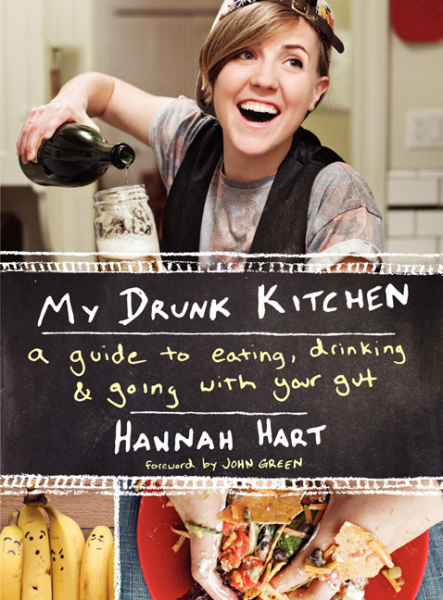
Review: My Drunk Kitchen by Hannah Hart

About the Book

One day, sad cubicle dweller and otherwise bored New York transplant Hannah Hart decided, as a joke, to make a fake cooking show for her friend back in California. She turned on the camera, pulled out some bread and cheese, and then, as one does, started drinking. (Doesn't everyone cook with a spoon in one hand and a bottle of wine in the other?) The video went viral and an online sensation was born.

My Drunk Kitchen includes recipes, stories, full color photos, and drawings to inspire your own culinary adventures in tipsy cooking. It is also a showcase for Hannah Hart's great comedic voice. Hannah offers key drink recommendations, cooking tips (like, remember to turn the oven off when you go to bed) and shares never-before-seen recipes such as:

  • The Hartwich (Knowledge is ingenuity! Learn from the past!)
  • Can Bake (Inventing things is hard! You don't have to start from scratch!)
  • Latke Shotkas (Plan ahead to avoid a night of dread!)
  • Tiny Sandwiches (Size doesn't matter! Aim to satisfy.)
  • Saltine Nachos (It's not about resources! It's about being resourceful.)

This is a book for anyone who believes they have what it takes to make a soufflé for the holiday party and show up the person who apparently has nothing better to do than bake things from scratch. It also recommends the drink you'll need to accompany any endeavor of this magnitude. In the end, My Drunk Kitchen may not be your go-to guide for your next dinner party . . . but it will make you laugh and drink . . . I mean think . . . about life.

Review

So, before I read this book, I didn't know anything about Hannah. What a great experience reading this book because not only does her personality permeate through the pages but it really makes you want to get to know her more. Her airy, sunshine personality draws you into her isms and laidback approach to life pushing you to be the best you can be, working with what you got, and listening to yourself to “follow your heart by trusting your gut.”

I have to give praise to the gorgeous photos in the book because it complemented the book so well. I'm not that adventurous to dive into those quirky recipes but it really showcased her creativity and really gave us some food for thought with her life lessons and punny anecdotes made the book awesome. The book felt like you were getting advice from your best bud which made the experience so much. I'm not a drinker and for those who may think alcohol dominates the theme of the book, it doesn't. She offers so much more and by the way is so funny. If you get a chance, sit back, relax and chill out with this insightful book.

Review: Sweet Pursuits by Pauline Wiles

Sweet Pursuits was definitely a fun read that will hit home for every woman out there. This book got me so riled up, I wanted to reach in the book and smack the main character. You know that friend that gets screwed over by a guy and they try to rationalize for him? You know, blames herself when it wasn't her fault? I think we have all been in Bella's shoes. Some of us are constantly there and others maybe for a moment in time. Who hasn't chased after the wrong guy?

I'm not judging those people in a relationship for many years but Bella was with a guy for six years and guess what? He didn't marry her. So naturally when she thought he was going to propose, he accepted a job in another country. Without a second thought, never looked back. Where does that leave her? No answers and no explanations. Ugh...

So, what does she do? Well, this is where she drove me crazy which made this book all the more interesting. Not only had he been gone but she held on the hope that he would come back. That's fine and all but after an extended period of time, you have to put him in the jerk category. I know it sucks to have your heart broken but I wouldn't want to invest another breath on him. By the way, his name is Owen but I won't mention him because he isn't worth it. When you read, you'll see why. Trust me, Karma comes back in a moment in the book that if every woman could have, it would be awesome.

So, by some chance, he comes back around to the area for his job. Bella gets so determined to not let him get away again that she comes up with a plan to get him to notice her every possible chance she gets. As she tries harder with no luck, her journey leads her down a path that only Bella can decide her fate and in the process learns a hard introspective lesson that opens opportunities for a life she didn't know she could have.

Sweet Pursuits was the definite chick lit. The characters in the book were so awesome that I could see them playing out on the screen. It sort of had a Bridget Jones aura about it, like she could be her cousin. Just like so many of the British comedies, it has a nature humor that had me rolling in laughter at times. You can't help but fall completely in love with the characters because they were relatable and really brought life to the book. The supporting plots of the book complemented so well the supporting relationships that they had with one another. It definitely had some great moments that were takeaways that people could relate and feel connected. I really think you'll enjoy this book, so add it to you tbr pile!